A water leak usually causes a boiler to lose pressure, a faulty pressure relief valve, recently bled radiators, or a failing expansion vessel. Most cases are safe to investigate yourself, but anything involving gas, visible water damage, or repeated pressure drops needs a qualified Gas Safe engineer.
Your boiler was working fine yesterday. This morning, you’ve got no heating, no hot water, and a pressure gauge sitting well below where it should be. Sound familiar?
A boiler losing pressure is one of the most common heating problems homeowners across Perth deal with, especially during the colder months when the system is working harder. The good news? It’s often something straightforward. This guide walks you through every likely cause, what you can safely handle yourself, and when it’s time to call in a professional.
What Is Boiler Pressure and Why Does It Matter?
Your central heating system is a sealed loop of water. Boiler pressure refers to how much force that water exerts as it moves through the system. Too low, and your boiler can’t circulate water properly, meaning no heat and no hot water. Too high, and you risk damaging internal components.
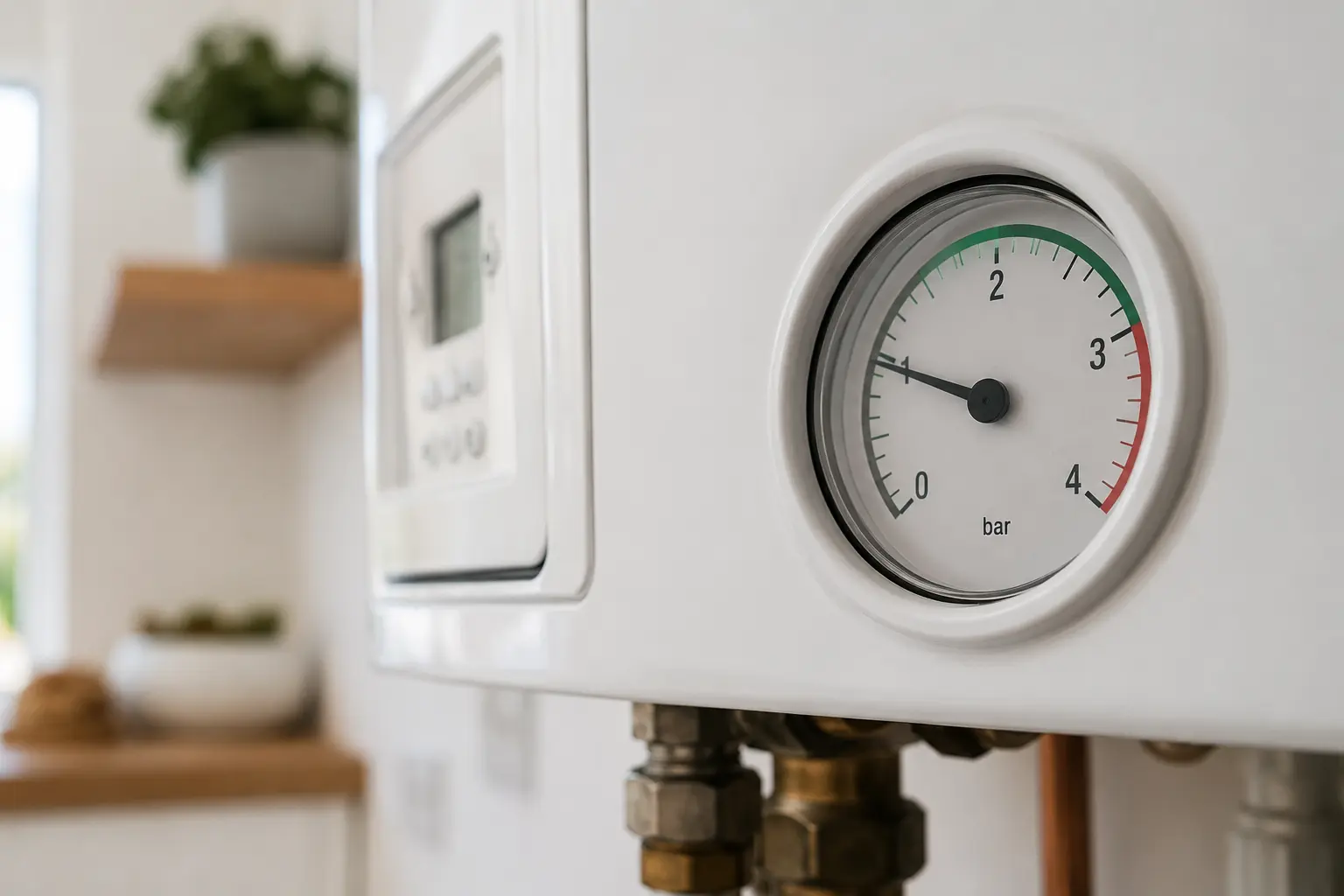
Most combi and system boilers operate best between 1 and 2 bar when cold. Below 1 bar is considered low pressure. Above 3 bar is too high.
How to Read Your Pressure Gauge
Before you do anything else, check your pressure gauge. On most boilers, it’s either:
- A dial gauge, a circular display with a needle. The needle should sit in the green zone, typically between 1 and 2 bar.
- A digital display shown directly on the boiler’s control panel, usually labelled “pressure” or with a bar symbol.
Here’s how to interpret what you see:
- Below 0.5 bar: Very low. Your boiler may lock out and stop working entirely.
- 0.5–1 bar: Low. Your boiler might still fire, but performance will be poor.
- 1–2 bar Normal operating range. You’re good.
- 2–3 bar Slightly elevated but not immediately dangerous.
- Above 3 bar: Too high. The pressure relief valve may activate.
If your gauge shows below 1 bar, you have a low boiler pressure issue. Keep reading.
Why Is My Boiler Losing Pressure? 5 Most Common Causes
1. A Small Leak in the System
The most common cause of a boiler losing pressure is a water leak somewhere in the system. Even a tiny drip from a pipe joint, radiator valve, or the boiler itself can cause a steady pressure drop over days or weeks.
Check for damp patches on walls or floors near radiators, pipework, and the boiler itself. Look under the boiler unit too; even a slow weep will eventually show up as water staining or corrosion.
If you find a leak, don’t ignore it. A boiler repair in Perth from a qualified engineer will identify the source and fix it properly. Patching a pressurised heating system without the right tools and expertise can make the problem worse.
2. Faulty Pressure Relief Valve
Your boiler has a pressure relief valve (PRV), a safety device that releases water if pressure climbs too high. Over time, this valve can wear out and start to weep, letting water escape even at normal pressure levels.
Signs of a faulty PRV include:
- A pipe outside your property constantly dripping (this is the discharge pipe from the PRV)
- Needing to repressurise your boiler every few days despite no visible leaks
A leaking PRV needs to be replaced by a Gas Safe registered engineer; it’s not a DIY job.
3. Bleeding Radiators
If you’ve recently bled your radiators to release trapped air, you’ve also released a small amount of water from the system. That will cause a pressure drop. This is completely normal.
The fix is simple: repressurise your boiler using the filling loop (more on that below).
4. Expansion Vessel Failure
Every boiler has an expansion vessel a small tank that absorbs the increase in water volume as your system heats up. When this vessel fails, pressure spikes when the heating runs and drops when it cools down.
A tell-tale sign is pressure that looks fine when cold but rises sharply when the boiler fires. If you’re noticing that pattern, the expansion vessel likely needs re-pressurising or replacing. This is a job for an engineer.
5. Boiler Pressure Drop Overnight
Noticing your boiler pressure drops overnight, even when the heating hasn’t been running? That points to a slow leak or a failing expansion vessel rather than a bleeding issue. A small, consistent drop over 24–48 hours means water is escaping the sealed system somewhere. Get it checked.
Safe to DIY vs. Call an Engineer
What You Can Do Yourself
- Check the pressure gauge and identify whether pressure is low
- Look for visible leaks around radiators, pipework, and under the boiler
- Repressurise your boiler using the filling loop (see steps below)
- Bleed radiators if you suspect trapped air but repressurise afterwards
When to Call a Professional
Call a Gas Safe registered engineer if:
- You can’t find the source of the pressure loss
- Pressure keeps dropping within a day or two of repressurising
- You can see active water leaking from the boiler or pipework
- The discharge pipe outside is dripping
- Your boiler locks out completely and won’t restart
Don’t keep repressurising a boiler that repeatedly loses pressure. Something is wrong, and continuing to top it up without finding the cause can mask a more serious problem.
📞 Need an engineer in Perth? Contact Home Heating Services Scotland for fast, same-day support.
How to Repressurise Your Boiler Step by Step
Most modern boilers can be repressurised using an internal or external filling loop. Here’s the general process:
- Turn off the boiler and let it cool for at least 30 minutes.
- Locate the filling loop, usually a silver or grey flexible braided hose beneath the boiler, with a valve at each end.
- Open both valves (turn them so they align with the pipe) to let cold mains water into the system.
- Watch the pressure gauge stop when it reaches 1.5 bar.
- Close both valves fully. Make sure neither is left even slightly open.
- Restart the boiler and check the pressure holds.
If your boiler has a built-in filling loop or keyway filler, the process is similar but slightly different; check your boiler manual or look up your model online for specific instructions.
If the pressure rises above 2 bar while filling, stop immediately and contact an engineer.
Common Mistakes to Avoid
Do:
- Repressurise slowly and stop at 1.5 bar
- Check for visible leaks before and after repressurising
- Call an engineer if pressure drops again within 48 hours
Don’t:
- Overfill the system; excess pressure can trigger the PRV or damage seals
- Ignore a dripping discharge pipe outside
- Keep topping up the pressure without investigating the cause
- Attempt to replace valves, seals, or the expansion vessel yourself
Why Choose Home Heating Services Scotland?
Home Heating Services Scotland is a Gas Safe registered heating company (559575) based in Perth, serving homes across central Scotland. The team are Worcester Accredited Installers (337842) and Baxi Approved Installers (824698), with over 20 years of combined experience across boiler repairs, installations, and full heating system diagnostics.
They install, service, and repair all major boiler brands including Worcester, Baxi, Glow-Worm, Vaillant, and Viessmann, and offer next-day boiler installation in most cases.
Rated 4.8 on Trustpilot and 5 stars on Google, they’re one of Perth’s most trusted heating companies. Finance options are also available through Kanda for those looking to spread the cost of a new boiler.
Stop Guessing Get It Fixed
A boiler losing pressure is rarely an emergency, but it’s always worth sorting out quickly. Left alone, a small leak or failing component can turn into a cold home, water damage, or a complete boiler breakdown.
If repressurising doesn’t hold, or you’re not sure where the pressure is going, get a professional to take a look. It’s a quick job for an experienced engineer and far cheaper than ignoring it until something fails.
Get in touch with Home Heating Services Scotland for a fast response, Gas Safe registered, and based right here in Perth.
Frequently Asked Questions
Why does my boiler keep losing pressure even after I top it up?
If your boiler pressure drops again within a day or two of repressurising, there’s an active leak or a faulty component, most likely a leaking PRV, pipe joint, or failing expansion vessel. You need a Gas Safe engineer to investigate.
Is low boiler pressure dangerous?
Low boiler pressure itself isn’t dangerous, but it will stop your boiler working properly. The bigger concern is what’s causing the pressure loss; a leak left untreated can cause water damage or lead to more serious system failures.
How often should boiler pressure drop?
A small drop over several weeks is normal as systems age. If pressure drops noticeably within days of repressurising, that’s not normal and needs attention.
Can I repressurise my boiler myself?
Yes, repressurising using the filling loop is a safe DIY task for most homeowners. Follow the steps above, don’t exceed 1.5 bar, and make sure both filling loop valves are fully closed afterwards.
What does a boiler pressure drop overnight mean?
A noticeable pressure drop overnight when the system hasn’t been running usually indicates a slow leak in the system or a problem with the expansion vessel. It won’t fix itself, so it’s worth getting an engineer to check it out.