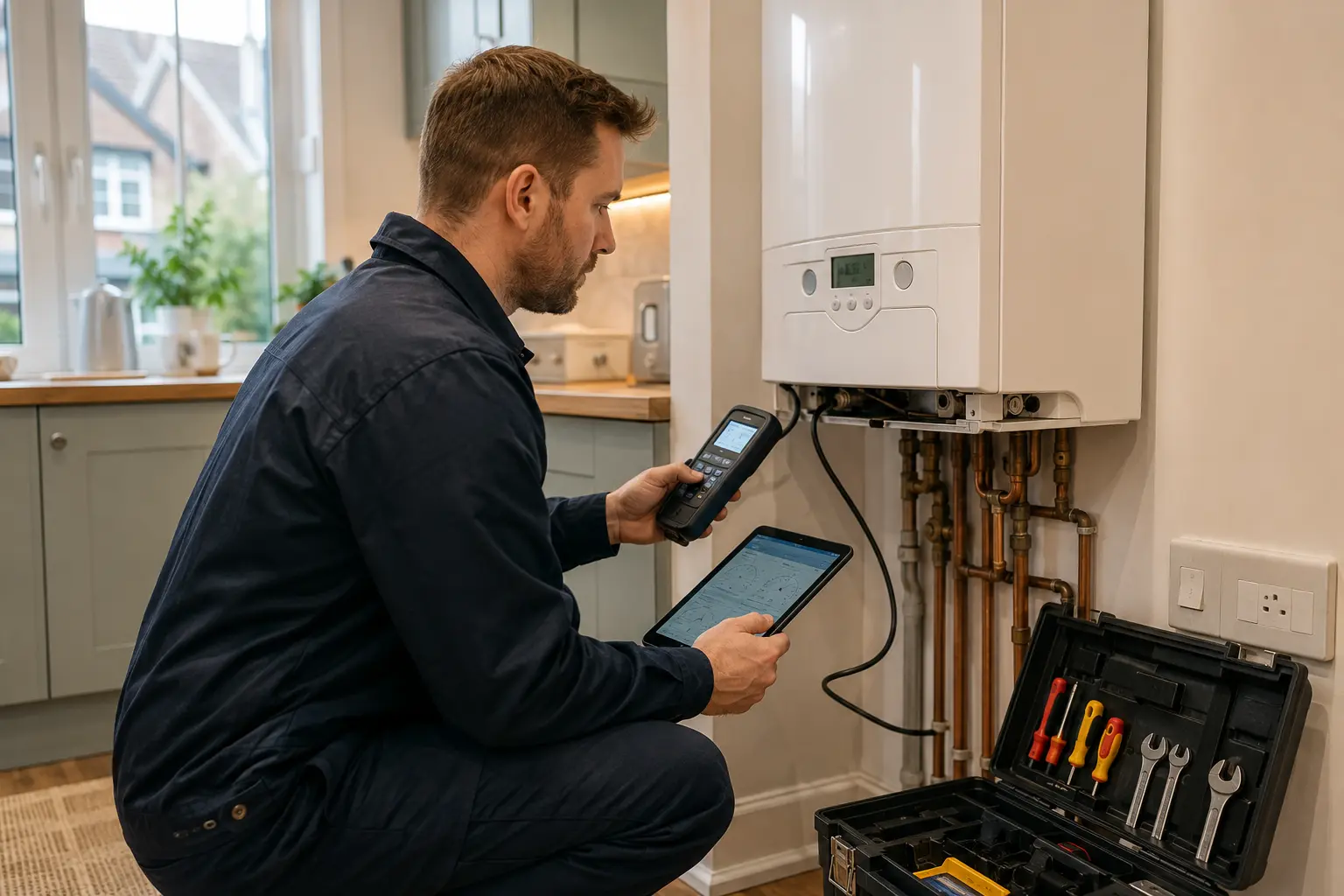
A boiler service is a thorough safety and performance check carried out by a Gas Safe registered engineer. It typically covers a visual inspection, flue check, combustion analysis, pressure check, burner and heat exchanger inspection, controls testing, and a clean of key components. The whole process usually takes 60–90 minutes and costs around £85.
Most people book an annual boiler service and then promptly forget what actually happens during one. The engineer arrives, disappears into the utility room or airing cupboard, and reappears an hour later with a thumbs up (or a list of issues). But what goes on in between?
If you’ve ever wondered exactly what is included in a boiler service, you’re in the right place. This guide breaks down every step a Gas Safe registered engineer carries out from the first visual check to the final report so you know what to expect, what to look out for, and whether your boiler is truly getting the attention it deserves.
What Is a Boiler Service?
A boiler service is a systematic inspection and maintenance check carried out by a qualified Gas Safe registered engineer. Its purpose is twofold: to confirm your boiler is operating safely, and to catch small problems before they snowball into expensive repairs.
A service is not the same as a boiler repair. Think of it like an MOT for your car the engineer isn’t fixing something that’s already broken. They’re checking everything is working as it should, cleaning what needs cleaning, and flagging anything that could cause problems down the line.
Why Does an Annual Boiler Service Matter?
Skipping a yearly service might feel harmless, especially if your boiler seems to be working fine. But a boiler running on the edge of a fault rarely shows obvious warning signs until something gives.
Here’s what a regular annual boiler service actually does for you:
- Protects your warranty. Most boiler manufacturers require annual servicing as a condition of their warranty. Miss it, and you could void your cover entirely.
- Cuts your energy bills. A boiler running inefficiently burns more fuel to produce the same heat. Servicing keeps it operating at its intended efficiency.
- Keeps your home safe. Carbon monoxide leaks are silent and potentially fatal. A service checks for this, along with gas leaks and combustion issues.
- Prevents breakdowns. Engineers can spot worn seals, failing components, and pressure problems before they cause a full breakdown, especially important heading into winter.
The Boiler Service Checklist Step by Step
Here’s exactly what a thorough boiler service covers, in the order a Gas Safe engineer will typically carry it out.
1. Visual Inspection
The engineer starts by examining the boiler and its immediate surroundings. They’re looking for:
- Signs of corrosion, rust, or physical damage to the casing and pipework
- Water staining or residue that could indicate a past leak
- Adequate ventilation around the unit
- Evidence of previous repairs or modifications
This initial sweep sets the tone for the rest of the service. If something obvious stands out here, it helps direct attention for the checks that follow.
2. Flue Check
The flue is the pipe that carries harmful combustion gases, including carbon monoxide, safely out of your home. A blocked, damaged, or incorrectly positioned flue is a serious safety hazard.
The engineer checks:
- That the flue is properly sealed and free from obstructions
- That the flue terminal (the external outlet) is clear and correctly positioned
- That combustion gases are being expelled efficiently and aren’t re-entering the building
3. Combustion Analysis
Using a specialised flue gas analyser, the engineer measures the gases being produced during combustion. This tells them whether the boiler is burning gas cleanly and efficiently.
Poor combustion readings can indicate a problem with the gas-to-air ratio, which affects both efficiency and safety. If the readings fall outside acceptable parameters, adjustments are made, or further investigation is flagged.
4. Pressure and Expansion Vessel Check
Boiler pressure is one of those things most homeowners are vaguely aware of but rarely fully understand. Here’s a simple guide to what the pressure gauge readings mean:
| Gauge Reading | What It Means |
|---|---|
| Below 1 bar | Too low; boiler may lock out or struggle to heat effectively |
| 1–1.5 bar | Ideal normal operating range when cold |
| 1.5–2 bar | Acceptable within range when system is hot |
| Above 2.5 bar | Too high; pressure relief valve may activate |
| Above 3 bar | Potentially dangerous; needs immediate attention |
The engineer will also check the expansion vessel, a small tank that absorbs pressure changes as water heats up and expands. A failed expansion vessel is one of the most common causes of pressure problems and frequent pressure drops.
5. Burner and Heat Exchanger Inspection
The burner is responsible for igniting the gas, and the heat exchanger transfers that heat to your water. Both components take a lot of punishment over years of use.
The engineer inspects:
- The burner for signs of damage, sooting, or uneven flame
- The heat exchanger for cracks, corrosion, or scale build-up
- Ignition leads and electrodes for wear
A cracked heat exchanger is a serious finding; it can allow combustion gases to mix with your heating water and must be addressed promptly.
6. Seals, Gaskets, and Pipework Check
Over time, the seals and gaskets inside a boiler degrade. The engineer checks all internal seals for signs of leakage or deterioration, and inspects the accessible pipework for:
- Corrosion or scale
- Poorly fitted joints
- Signs of water or gas leakage
Even a slow drip can cause long-term damage to internal components if left unchecked.
7. Controls and Safety Devices Test
Every boiler has a set of safety devices designed to shut it down if something goes wrong: thermostats, pressure relief valves, overheat cut-outs, and more. The engineer tests these systematically to confirm they’re functioning correctly.
They’ll also check the gas valve, ensuring it opens and closes properly, and test the boiler’s response to thermostat signals and timer controls.
8. Cleaning Key Components
A service isn’t just inspection it includes cleaning. The engineer will clean components that accumulate debris or scale during normal operation, including:
- The condensate trap (which can block and cause the boiler to lock out)
- The heat exchanger (where scale reduces efficiency)
- The burner and flame sensors
Once everything has been checked and cleaned, the engineer fires up the boiler, runs it through a full heating cycle, and confirms everything is operating correctly before they leave.
Safe to DIY vs. Call an Engineer
It’s worth being clear on this:
| Task | DIY OK? |
|---|---|
| Checking boiler pressure gauge | ✅ Yes |
| Topping up pressure (repressurise) | ✅ Yes following manufacturer guidance |
| Bleeding radiators | ✅ Yes |
| Resetting a locked-out boiler | ✅ Yes once only; repeated lockouts need a professional |
| Checking the condensate pipe for freezing | ✅ Yes, you can thaw it with warm (not boiling) water |
| Any internal boiler component check or repair | ❌ No, Gas Safe registered engineer only |
| Full boiler service | ❌ No, legally this must be carried out by a Gas Safe registered engineer |
Attempting to service your own boiler is not only dangerous, but it’s also illegal. It can also invalidate your warranty and void your home insurance in the event of a gas-related incident.
How Long Does a Boiler Service Take?
A standard boiler service takes between 60 and 90 minutes. The exact time depends on:
- The type and age of your boiler
- Whether any issues are found during the inspection
- How accessible the boiler and associated components are
If the engineer identifies a problem during the service, they’ll explain what’s needed before carrying out any additional work.
What Does a Boiler Service Cost?
At Home Heating Services Scotland, a full boiler service is priced at a flat rate of £85 including VAT. No hidden charges, no call-out fees added on top.
For context, the average cost of an emergency boiler repair in the UK can run into several hundred pounds, making a regular service one of the best-value investments you can make in your heating system.
Do’s and Don’ts: Getting the Most from Your Service
Do:
- Book your service before winter engineers get busy fast from October onwards
- Make sure the boiler and surrounding area are easily accessible before the engineer arrives
- Note down any unusual noises, error codes, or behaviour your boiler has shown recently
- Ask for a written service record; you’ll need this for warranty purposes
Don’t:
- Attempt to open or inspect internal boiler components yourself
- Ignore repeated pressure drops between services; it’s a sign something needs attention
- Skip the service just because the boiler “seems fine”
- Let your boiler go more than 12 months without a check
Why Choose Home Heating Services Scotland?
Home Heating Services Scotland serves Perth and central Scotland, with a team of Gas Safe registered engineers who bring over 20 years of combined experience to every job. All boiler services are carried out thoroughly and priced transparently at £85 including VAT, with no surprises.
The team services all boiler types and major brands, including Worcester, Baxi, Glow-Worm, Vaillant, and Viessmann. They’re rated highly on Google, Trustpilot, and MyBuilder, with customers consistently praising their communication, punctuality, and honest advice.
Whether you need a routine annual service or you’ve noticed something unusual with your boiler, Home Heating Services Scotland makes booking straightforward either online or by phone.
Book Your Boiler Service Today
Don’t wait until your boiler breaks down on the coldest night of the year. A professional annual service is the most reliable way to keep your heating system safe, efficient, and covered under warranty.
👉 Book your boiler service with Home Heating Services Scotland today Gas Safe registered engineers, flat-rate pricing, and next-day availability across Perth and central Scotland.
Frequently Asked Questions
What is included in a boiler service?
A boiler service includes a visual inspection, flue check, combustion analysis, pressure and expansion vessel check, burner and heat exchanger inspection, seals and pipework check, controls and safety device testing, and cleaning of key components. The engineer provides a full service report at the end.
How often should I have my boiler serviced?
Annual servicing is recommended by both manufacturers and Gas Safe engineers. Most boiler warranties also require proof of annual servicing to remain valid.
Can I service my boiler myself?
No. By law, all boiler servicing must be carried out by a Gas Safe registered engineer. Attempting to service your own boiler is dangerous, illegal, and will invalidate your warranty.
How long does a boiler service take?
Most boiler services take between 60 and 90 minutes, depending on the boiler type, age, and condition.
How much does a boiler service cost in Perth?
Home Heating Services Scotland charges a flat rate of £85 including VAT for a full boiler service covering all the checks and cleaning outlined in this guide, with no hidden fees.