
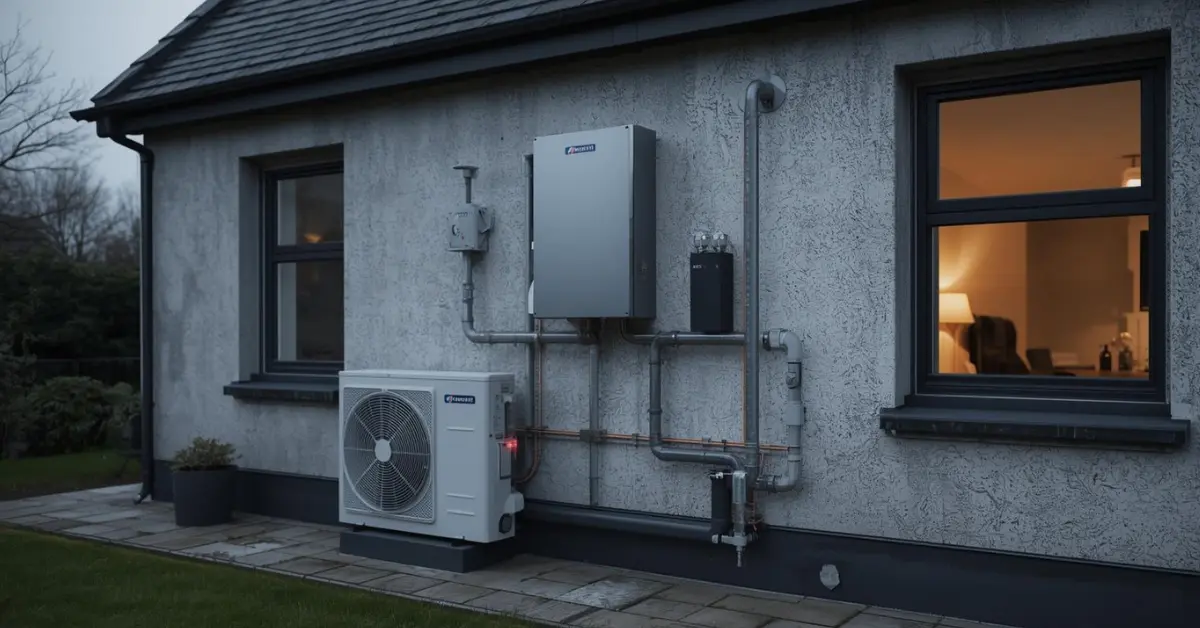
How an air source heat pump works
A heat pump takes heat from the outside air and transfers it into your home’s heating and hot water system. Even when it’s cold outside, there is still heat energy available in the air. The heat pump concentrates that heat and delivers it to your radiators or underfloor heating at a lower, steadier temperature than many boiler systems.What “low temperature heating” means in practice
A boiler often heats water to higher temperatures and then cycles on and off to maintain comfort. A heat pump typically runs for longer periods at lower flow temperatures, keeping rooms warm more evenly. This is why radiator sizing and insulation matter. If your home loses heat quickly, the system has to work harder to maintain comfort.Do heat pumps work well in Scottish weather?
Yes, modern heat pumps are designed to operate in cold climates. Scotland’s winters are often more about long periods of cool, damp weather than extreme lows, though some areas do get sharper frosts. A correctly sized system can handle these conditions, but performance depends heavily on the quality of the design and the home’s heat loss.What affects performance in winter
- Insulation and draught levels
- Radiator or underfloor heating capacity
- Heat pump sizing matched to heat loss
- Flow temperature and system design
- How you run your heating controls
Is your home a good candidate?
Air Source Heat Pump Installation Scotland can suit many property types, but some are easier wins than others.Homes that often suit heat pumps well
- Well-insulated homes with modern windows and decent draught control
- Properties with underfloor heating
- Homes where radiators can be upgraded if needed
- Households comfortable with steady background warmth
Homes that may need extra preparation
- Older stone properties with limited insulation
- Tenements with restricted outdoor space or planning constraints
- Homes with very small radiators designed for high-temperature boiler flow
- Properties with high heat loss and significant draughts
Outdoor space and noise considerations
A heat pump includes an outdoor unit that needs airflow and a sensible location.Placement considerations
- A clear area with good airflow and minimal obstruction
- Practical routing for pipework into the home
- Consideration for neighbours and bedroom windows
- Access for maintenance
Radiators, pipework, and heat emitters
One of the biggest factors in comfort is whether your home can release heat effectively at lower temperatures.Radiator sizing
Some homes already have radiators that are large enough. Others will need upgrades in certain rooms, especially larger spaces or rooms that lose heat faster. If your current boiler system uses very hot water to compensate for small radiators, you may need larger radiators to get the same comfort with a heat pump.Underfloor heating
Underfloor heating pairs very well with heat pumps because it works efficiently at lower temperatures and gives even warmth across the room.Pipework and system condition
Older systems may have pipework restrictions or sludge. A clean, well-balanced system helps a heat pump perform smoothly.Hot water: cylinders and daily routines
Most air source heat pump setups include a hot water cylinder rather than instant hot water like many combi boilers.What that means for you
- You’ll store hot water and use it throughout the day
- Cylinder size matters, especially for families or multiple bathrooms
- Reheat times are different from combi boilers, so scheduling can help
What the installation process looks like
Air Source Heat Pump Installation Scotland typically follows a structured process.Home survey and design
- Heat loss calculation room by room
- Radiator assessment and recommendations
- Hot water needs review and cylinder sizing
- Outdoor unit placement planning
- Discussion of controls and how you like to heat the home
Installation and commissioning
- Outdoor unit fitted on a suitable base
- Pipework connections installed and insulated
- Indoor components fitted, including cylinder if needed
- System filled, tested, and commissioned
- Controls set up and explained clearly
Running costs and efficiency
Running costs depend on several factors:- Your home’s heat loss
- Electricity price and tariff
- Flow temperature and system design
- How consistently you heat the home
- Whether you use smart controls and zoning
Tips to keep running costs sensible
- Improve insulation and reduce draughts where possible
- Avoid frequent on-off heating habits
- Use steady schedules that match your routine
- Make sure radiators are properly sized and the system is balanced
Blended approaches: heat pump plus other heating
Some households choose a staged approach:- Improve insulation first
- Upgrade radiators and controls
- Install a heat pump once the home is ready
Comfort expectations: what feels different?
Heat pumps often deliver comfort in a smoother way. Instead of very hot radiators for short bursts, you may feel gently warm radiators more of the time and a steadier indoor temperature. Many households end up preferring this once they’re used to it, but it helps to know it can feel different at first.Is it right for your home?
Air Source Heat Pump Installation Scotland can be a great choice if you want:- A modern heating system designed for long-term use
- Steady warmth and good comfort
- A path toward lower-carbon home heating
- A system that benefits from good insulation and thoughtful design