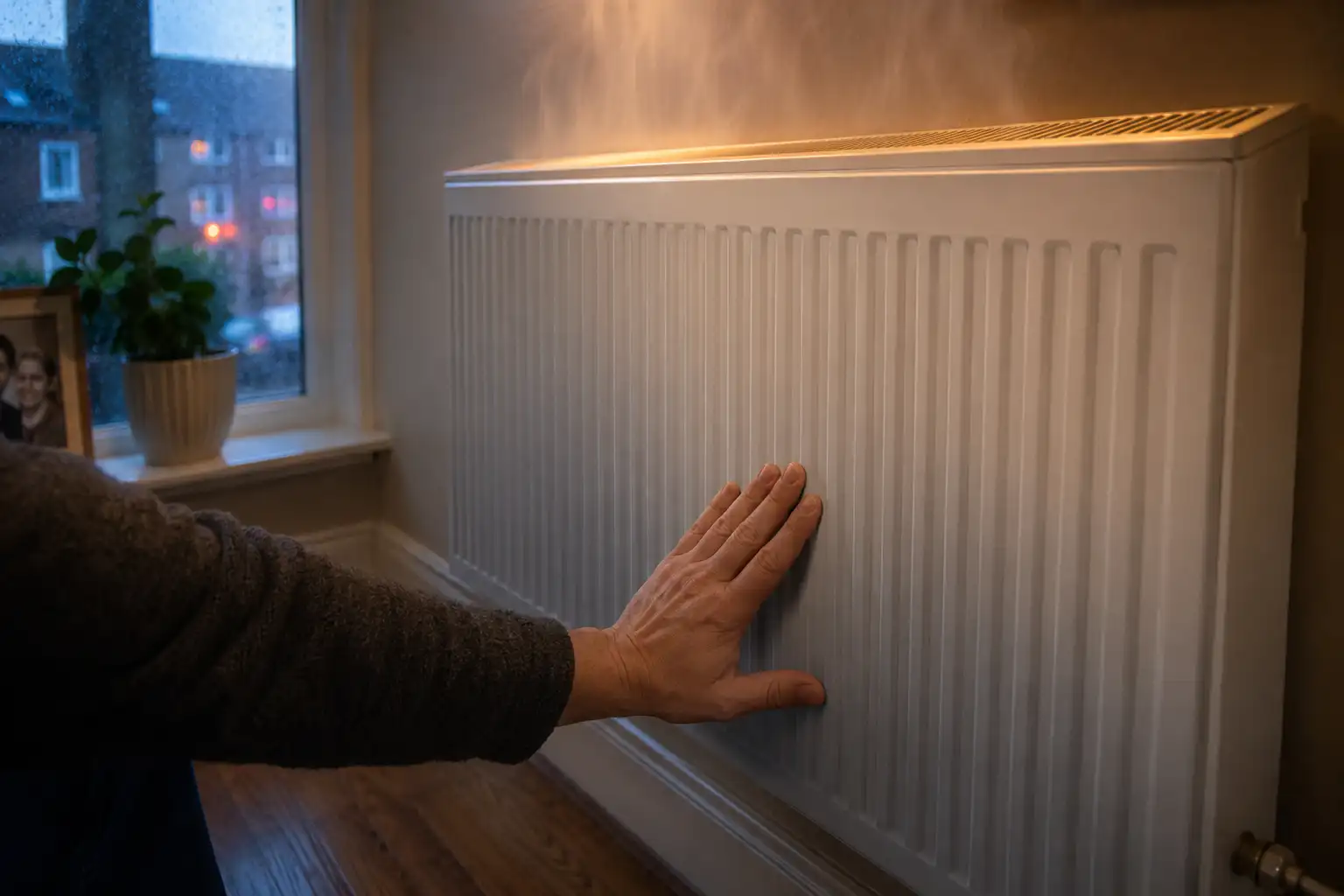
Your radiators take forever to warm up. Some stay cold at the bottom while the top gets hot. Maybe you hear the odd gurgle or bang from the pipes, and your heating bills keep creeping up for no obvious reason.
Sound familiar? These are classic signs your central heating is clogged with sludge, and power flushing radiators is often the fix. It clears out the gunk that builds up inside your system over the years, so your heating runs cleaner, quicker, and cheaper.
This post explains what power flushing is, the symptoms that suggest you need one, and what the process actually involves. You’ll also get honest do’s and don’ts, the common mistakes people make, and a rough idea of cost.
What Is Power Flushing?
Power flushing is a deep clean of your central heating system. A machine pumps water and cleaning chemicals through your pipes and radiators at high speed to shift the sludge, rust, and debris that build up over time.
That sludge is mostly rust and dirt from inside your metal pipes and radiators. As it settles, it blocks the flow of hot water and forces your boiler to work harder than it should.
A proper flush pushes all that muck out and leaves clean water circulating again. The result is a system that heats evenly, warms up faster, and puts less strain on your boiler.
Power Flush Symptoms: Signs Your System Needs One
The clearest power flush symptoms are cold spots on your radiators, slow heat-up times, and noises coming from your boiler or pipes. If you spot a few of these together, sludge is the likely culprit.
Here are the common warning signs to watch for:
- Cold patches at the bottom of radiators while the top stays warm
- Radiators that take ages to heat up or never get properly hot
- Banging, gurgling, or knocking noises from the boiler or pipework
- Dirty, black water when you bleed a radiator
- Some radiators warm, others cold across the same system
- Rising heating bills with no change in how you use it
One or two signs, or several?
One cold radiator on its own might just need bleeding or balancing. But when several symptoms show up at once, that usually points to a wider sludge problem that a flush will sort.
If you’re unsure, it’s worth getting an engineer to check. They can test the water and tell you whether a flush is genuinely needed or whether something simpler will do the trick.
Why Power Flushing Matters
A clean system heats your home better and protects your boiler from early failure. That’s the short version, and it’s why this job is worth taking seriously.
Sludge doesn’t just cause cold spots. It wears down your pump, clogs valves, and can damage expensive parts inside a modern boiler. Left long enough, it shortens the life of the whole system.
There’s a money side too. When your boiler has to fight through blocked pipes, it burns more fuel to hit the same temperature. Clear the blockage and you cut waste, which shows up on your bills over a long Scottish heating season.
If you’re having a new boiler fitted, a flush matters even more. Installers often carry one out first so the new unit starts life with clean water. You can see how we handle that on our boiler installations page.
How Power Flushing Works
A power flush usually takes several hours and is done by a qualified engineer using a specialist pumping machine. You don’t need to do anything except give them access to your system.
Here’s roughly how the job runs:
- Connect the machine to your heating system, often at the pump or a radiator
- Pump cleaning chemicals through the pipes and radiators at high flow
- Loosen the sludge and rust stuck inside, one radiator at a time
- Flush out the dirty water until it runs clear
- Add an inhibitor to slow down future rust and sludge
That final step matters. A good inhibitor keeps your freshly cleaned system protected for years, so you’re not back to square one in a couple of winters.
Central Heating Power Flush Cost
The central heating power flush cost usually depends on how many radiators you have and how bad the sludge build-up is. Bigger homes with more radiators take longer, so they cost more.
Rather than quote a figure that may not fit your home, we’ll assess your system and give you a clear price before any work starts. No surprises, no vague estimates once the job’s underway.
It helps to think of a flush as protecting a much bigger investment. A few hours of cleaning is far cheaper than replacing a boiler that’s failed early because of sludge damage.
Do’s and Don’ts
Getting the most from a power flush comes down to timing and follow-up care. A few simple habits keep your system healthy long after the job’s done.
Do:
- Book a flush if several symptoms show up together
- Ask the engineer to add an inhibitor afterward
- Consider a flush before fitting a new boiler
- Bleed your radiators when they show cold spots at the top
Don’t:
- Ignore black water when you bleed a radiator
- Assume every cold radiator needs a full flush
- Attempt a DIY flush with a garden hose or homemade rig
- Skip the inhibitor to save a few pounds
Common Mistakes People Make
The biggest mistake is waiting too long. Many people put up with cold radiators and rising bills for years before booking a flush, by which point the boiler may already be strained.
Another common slip is skipping the inhibitor afterward. Without it, rust starts forming again almost immediately, and you’ll be facing the same problem within a few winters.
Some also try to flush a system themselves. Without the right machine and chemicals, you can’t shift compacted sludge properly, and you risk dislodging debris that then jams your pump or valves.
Finally, people sometimes pay for a flush when the real issue was a single radiator that needed balancing. A proper check first saves you money on work you don’t need.
Why Home Heating Services Scotland
We service and install heating systems across Scotland, so we deal with sludge and cold radiators day in, day out. That hands-on experience means we can quickly tell whether a flush will fix your problem or whether something simpler will do.
We’ll assess your system honestly, explain what we find, and give you a clear price before we start. If a full flush isn’t needed, we’ll tell you straight.
And if you’re weighing up a new boiler, we can handle the flush and installation together, so your new unit starts with a clean, protected system.
Conclusion
Power flushing clears the sludge that causes cold radiators, noisy pipes, and wasted fuel. For many Scottish homes with older or neglected systems, it’s a genuinely worthwhile fix.
The key takeaway: don’t wait until your boiler suffers. If you’re seeing several power flush symptoms together, get your system checked, book the flush if it’s needed, and always add an inhibitor to keep the benefits lasting.
FAQ’s
What is power flushing?
Power flushing is a deep clean of your central heating. A machine pumps water and chemicals through your pipes and radiators at high speed to remove sludge, rust, and debris.
How do I know if I need a power flush?
Look for cold spots on radiators, slow heat-up, banging or gurgling noises, and dirty water when bleeding. Several of these signs together usually point to sludge.
How much does a central heating power flush cost?
It depends on how many radiators you have and how bad the build-up is. Larger systems cost more, so it’s best to get an assessment and a clear price first.
How long does a power flush take?
Most flushes take several hours, depending on the size of your system and the level of sludge. A qualified engineer handles the whole job.
Can I power flush radiators myself?
It’s not recommended. Without the right machine, chemicals, and inhibitor, you can’t clear compacted sludge properly and may risk damaging your pump or valves.
Ready to Sort Your Heating?
If your radiators aren’t performing and you suspect sludge, get your system checked properly. Get in touch with Home Heating Services Scotland and we’ll assess whether power flushing is the right fix for your home.