You’ve seen your energy bills climb and you’re wondering if a different heating system would actually save you money. Maybe your old boiler is on its way out, and you’re weighing up whether to stick with gas, switch to electric, or take the plunge on a heat pump.
This boiler running costs comparison breaks down what each option really costs to run, so you can make a decision based on numbers instead of guesswork. We’ll cover how the three systems differ, where the real savings sit, and what to watch out for before you commit.
What drives the running cost of each heating system?
Running cost comes down to two things: how much energy your system uses, and how much that energy costs per unit. Gas is cheaper per unit than electricity, but electric systems and heat pumps can use energy far more efficiently.
Here’s the short version. A gas boiler burns cheap fuel but wastes some heat. An electric boiler turns almost all its energy into heat, yet electricity costs more per unit. A heat pump uses electricity too, but it moves heat rather than making it, so it squeezes far more warmth from every unit you pay for.
That efficiency gap is the whole story. Once you understand it, the numbers make a lot more sense.
Gas vs electric boiler: which is cheaper to run?
For most homes with a mains gas connection, a gas boiler is still the cheaper option to run day to day. Electricity typically costs several times more per unit than gas, so even though electric boilers are close to fully efficient, the higher fuel price cancels out that advantage.
When a gas boiler makes sense
If your home is already on the gas grid, a modern condensing gas boiler usually gives you the lowest heating bills of the three. It heats up fast, handles cold Scottish winters well, and works with the radiators you already have.
The trade-off is that gas prices move around, and you’re still burning fossil fuel. But for pure running cost right now, gas is hard to beat for a connected home.
When an electric boiler makes sense
Electric boilers shine in homes with no gas supply, or in smaller flats where heating demand is low. They’re compact, quiet, and need almost no servicing since there’s no combustion involved.
The catch is the unit price of electricity. If you heat a large home this way, your bills can climb quickly. So an electric boiler suits low-demand properties or off-grid homes more than big family houses.
Heat pump running costs in the UK: the efficiency advantage
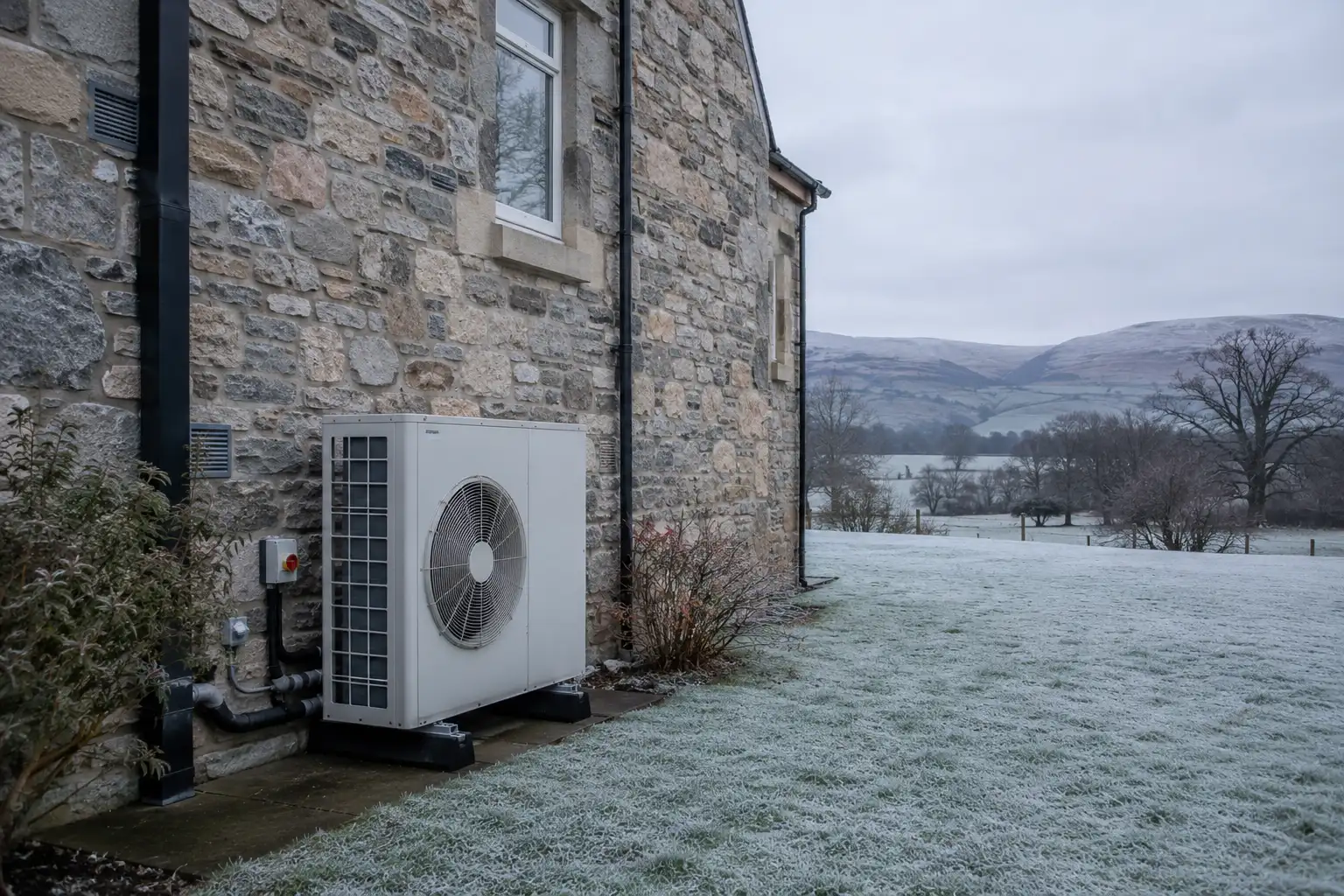
A heat pump can cost less to run than an electric boiler and, in a well-insulated home, can compete with gas. That’s because it delivers roughly three units of heat for every one unit of electricity it uses.
This is the number that changes everything. A gas boiler might turn 90% of its fuel into heat. A heat pump effectively returns 300% or more, thanks to the way it pulls warmth from the outside air or ground.
Why heat pumps love a warm, well-sealed home
Heat pumps work best when your home holds onto heat. Good insulation, decent windows, and larger radiators or underfloor heating let the system run at lower temperatures, which is where it’s most efficient.
In a draughty, poorly insulated property, a heat pump has to work harder and your savings shrink. So the running cost you get depends heavily on the state of your home.
A realistic scenario
Picture two similar homes in Perthshire. One keeps its gas boiler, the other fits a heat pump after topping up loft and wall insulation. Over a cold winter, the heat pump home may see lower or comparable running costs, while cutting its carbon output sharply. The gas home pays a little less some months but more over the system’s lifetime as gas prices shift.
Practical insights: do’s and don’ts
A few simple habits make a big difference to what you actually pay, whichever system you choose.
Do:
- Fix insulation and draughts first, before you upgrade any heating system.
- Size the system to your home properly, not by guesswork.
- Service your boiler yearly to keep it running efficiently and safely.
Don’t:
- Assume the cheapest system to install is the cheapest to run. It rarely is.
- Fit a heat pump into a leaky home and expect low bills.
- Ignore your radiators. The wrong size can drag down efficiency.
A common mistake is comparing systems on the sticker price alone. The running cost over ten or fifteen years matters far more, and that’s where a proper survey pays off.
Why choose Home Heating Services Scotland
Choosing between these systems is easier when someone assesses your actual home rather than handing you a generic quote. That’s the part we handle for you.
At Home Heating Services Scotland, we look at your property, your current setup, and how you use heat, then talk you through the real running cost of each option. Whether you’re replacing a tired gas boiler or thinking seriously about a heat pump, we help you weigh the numbers honestly. You can see our boiler installations service for how we approach fitting and sizing.
If you’re also considering a heat pump or exploring low-carbon heating, it’s worth asking us about our renewables and servicing options too, so you get one clear picture instead of scattered advice.
The bottom line
For a home on mains gas, a modern gas boiler usually wins on day-to-day running cost. An electric boiler suits smaller or off-grid homes. A heat pump can match or beat both over time, but only in a home that holds its heat well.
The single most useful step? Get your home assessed before you choose. The right system for your neighbour may be the wrong one for you, and a proper survey saves you from an expensive mismatch.
FAQ’s
Is a gas boiler cheaper to run than an electric boiler?
In most homes with mains gas, yes. Gas costs less per unit than electricity, so gas boilers usually give lower running costs despite being slightly less efficient.
Are heat pumps cheaper to run than gas boilers in the UK?
They can be, especially in well-insulated homes. A heat pump delivers around three units of heat per unit of electricity, which offsets electricity’s higher price.
Do electric boilers cost a lot to run?
They can in larger homes, because electricity is pricier per unit. In small flats or off-grid properties with low demand, they’re more affordable and easy to maintain.
What makes a heat pump more efficient?
It moves existing heat rather than burning fuel to create it. Good insulation, larger radiators, and lower flow temperatures all boost its efficiency.
Should I improve insulation before switching heating systems?
Yes. Sealing draughts and adding insulation lowers your heat demand, which cuts running costs for any system and helps a heat pump perform at its best.
Ready to compare your options?
Get a clear, honest look at the running costs for your home. Talk to Home Heating Services Scotland and we’ll help you pick the heating system that actually fits your property and your budget.