If your heating feels like it’s running “halfway,” you’re not alone especially through a Scottish autumn when the cold creeps in and your system seems to drag its feet. One of the most common causes of cold rooms is trapped air. That’s when how to bleed a radiator becomes useful (and usually faster than you think).
In this guide, you’ll learn how to bleed radiators step by step, what to do when you’ve got a cold radiator top, and what to check if your radiator not heating up properly. If anything feels unsafe or complicated, I’ll also show you when NOT to bleed yourself call an engineer instead.
What “bleeding a radiator” actually means (and why air matters)
A radiator needs hot water circulating properly. Over time, small pockets of air can form in the system. When that air gets trapped, it blocks the flow of water through part of the radiator.
That’s why you might notice:
- Cold spots on radiator (often the top or one section stays cooler)
- A radiator that feels warm at the bottom but not at the top
- Hot water not moving as it should
- In some cases, gentle gurgling noises
Bleeding is simply releasing that trapped air from the radiator so water can fill the space again.
Why bleeding helps in Scottish homes
Scottish winters don’t arrive politely they turn up fast. If you’ve just switched your heating back on after months, it’s normal to find a few radiators need attention.
Bleeding radiators can:
- Improve how evenly heat spreads
- Help the system work more efficiently
- Reduce those frustrating cold spots on radiator
- Make your whole home feel warmer without turning the thermostat up higher
It’s also a great first move if you’re trying to fix uneven heat before you start changing controls or booking urgent repairs.
Tools you’ll need before you start
Before you touch the bleed key, make sure you’ve got the basics ready. Nothing kills momentum like hunting for tools while your hands are full.
You’ll need:
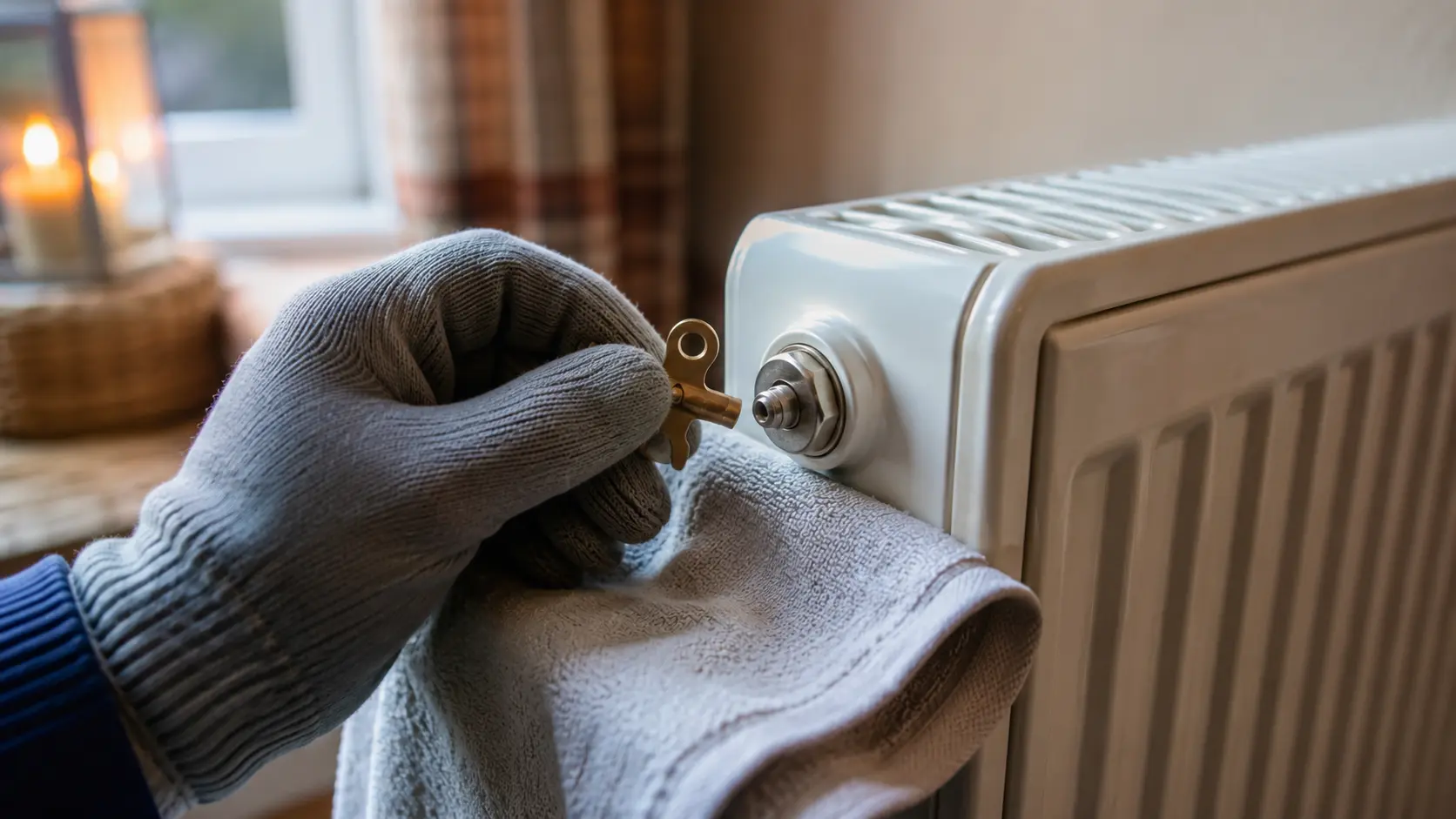
- A bleed key (usually fits the small valve at the top of the radiator)
- A small cloth or towel
- A container/bowl or dish (air comes with a bit of water)
- Optional: gloves (radiators can stay hot)
Quick safety note
Turn off the heating before you begin, and let the radiator cool down if it’s very hot. You want to bleed confidently not rush.
Step-by-step: How to bleed a radiator (5 simple steps)
Step 1: Check the radiator for signs of trapped air
Start by feeling the radiator. If you notice the cold radiator top but the bottom is noticeably warmer, that’s a strong clue.
Also look for:
- Uneven warmth along the panels
- Gurgling sounds
- A radiator that never really gets fully hot
Step 2: Turn the heating off
Switch off your heating system and give it a few minutes. This makes the process cleaner and safer.
If you’re bleeding multiple radiators, do them one at a time.
Step 3: Position your cloth and container
Place a cloth under the bleed valve area and hold your container ready. When you crack the valve open, you may get a small spray of water mixed with air.
That’s normal. Keep it controlled so you don’t end up with wet floors.
Step 4: Use the bleed key gently
Fit your bleed key into the valve.
Now turn it slowly just enough to open the valve. Listen for a hiss. Air will escape first.
Keep the key turned slightly until:
- The hissing changes to a steady flow of water (fewer air bursts)
- The flow remains consistent for a short moment
Then close the valve securely.
Step 5: Recheck and repeat if needed
Now go back and feel the radiator again after the system restarts. Often the radiator warms more evenly after bleeding.
If you still get cold spots on radiator, you may need to repeat the process once more especially if the system was badly air-locked.
Helpful insights: Do’s and Don’ts (so you don’t make things worse)
Do
- Use a small towel under the bleed valve.
- Bleed slowly and keep control of the valve movement.
- Feel for improvement once the heating comes back on.
- Keep notes if you have recurring cold areas (some systems need more attention).
Don’t
- Don’t open the valve too quickly air release can be messy.
- Don’t leave the valve slightly open.
- Don’t bleed all radiators on the same day if you’re unsure. Start with the worst ones.
- Don’t keep forcing a stuck bleed valve. If it won’t move smoothly, stop.
When NOT to bleed yourself call an engineer instead
Bleeding can be a simple fix, but it’s not the answer to everything. Call a heating engineer if:
- You can’t bleed the radiator properly (valve feels stuck or won’t turn)
- You get ongoing issues like radiator not heating up even after bleeding
- You suspect a larger system problem (for example, pressure keeps dropping)
- You notice leaks around the valve or fittings
- You’re dealing with frequent repeats every few weeks
- Your system is more complex than a standard setup and you’re unsure what you’re looking at
In Scotland, we see plenty of systems that have been “worked on” over the years. If anything feels off, it’s better to get the right help early than keep trying the same DIY solution.
Real-life examples from Scottish homes (what you might actually see)
Example 1: “My heating is on, but one room stays cold”
You check the radiator and the bottom is warm, but the top is still cool. That cold radiator top usually points to air stuck in the line. Bleeding restores flow, and the room warms up properly.
Example 2: “I bled it once nothing changed”
Sometimes the first attempt doesn’t fix it fully, especially if the system has a lot of trapped air. Try again carefully. If it still doesn’t improve, it can point to something beyond bleeding radiators like circulation issues.
Example 3: “All radiators feel uneven”
If multiple radiators have cold spots on radiator at the same time, the issue may be system-wide rather than just one trapped air pocket. That’s the moment to book Heating Maintenance Perth support so the whole setup gets checked properly.
Why choosing Home Heating Services Scotland makes sense
If you want reliable heating through the colder months, it’s worth working with a local team that handles these jobs properly not just “as a quick fix.”
When you book with Home Heating Services Scotland, you get heating and plumbing support backed by experienced engineers and a service approach built for real homes across Perth and central Scotland.
If you’re interested in ongoing care, you can also explore Boiler Service Plans and keep everything running smoother year-round. And if you’re setting up a new system, it helps to know what’s involved in Boiler Installations so the right parts and setup are in place from the start.
For ongoing system care that goes beyond basic bleeding, see:
Heating Maintenance Perth
Conclusion
Learning how to bleed a radiator is often the easiest way to fix trapped air and improve heat. If you’ve got the cold radiator top, a careful bleed can bring the radiator back to even warmth and help reduce those cold spots on radiator issues.
Just remember the key points:
- Bleed slowly and safely
- Wait for air to stop and water to run steadily
- If it doesn’t improve or anything feels unsafe stop and call an engineer
You want a warm home, not guesswork.
FAQ
What does a cold radiator top mean?
It often means trapped air is blocking water flow in that part of the radiator.
Can I bleed radiators while the heating is on?
It’s not recommended turn the heating off first for a safer, cleaner process.
What if my radiator not heating up after bleeding?
If it doesn’t improve, it may be a system issue beyond bleeding radiators.
Do I need a bleed key to bleed a radiator?
Yes your valve uses a specific bleed key to open it properly.
How often should I bleed radiators?
Only when you notice uneven heat or trapped air symptoms (like repeated cold areas).
CTA
Need help fixing uneven heating or want your system checked properly before winter bites? Get in touch with Home Heating Services Scotland.