Solar panel installation in Perth, Scotland, makes the most sense when the discussion starts with the property rather than a generic promise of savings. For residential properties and businesses, I would first assess property characteristics such as sunlight, roof orientation, shading, and system specification, because these govern solar yield and energy production more directly than headline figures. A 4kWp solar system can generate power year-round despite Perth’s varied climate, giving occupants a clean electricity option and a route to lower your energy bills while reducing reliance on traditional energy suppliers. That is especially relevant where energy-efficient buildings are already being considered alongside wider property improvements.

The less obvious part is what happens after that generation is produced. A solar battery storage setup can store excess electricity and strengthen energy independence, while keeping surplus solar power available for later use rather than sending everything to the grid. Where surplus electricity is exported, the Smart Export Guarantee and a participating energy supplier can create an additional route to income, subject to the chosen tariff. From a practical installation perspective, MCS-certified installers, 0% VAT on installation, and an appropriate EPC rating matter because solar should be treated as a long-term investment, not simply an equipment purchase. Over a 25-30 year panel lifespan, that approach can also help reduce carbon footprint associated with fossil fuels.
Why Go Solar in Perth
For many households, the strongest case for solar begins with rising energy costs rather than technology itself. Sustainable living becomes much more practical when solar energy is used to lower electricity bills and reduce a home’s carbon footprint at the same time. Well-designed solar PV systems, professionally installed for maximum efficiency, can make productive use of Perth’s available generation conditions, with 824 kWh/kWp and around 1,280+ sunshine hours supporting a typical 4kWp system. At the example level, that can mean around 3,296 kWh annually, potentially covering 87% of average household electricity use. From an installer’s perspective, this is where long-term savings become more meaningful than simply choosing the biggest array that will fit on a roof.
There is also a practical advantage in designing solar around when electricity is actually needed. Longer summer daylight hours and cooler winter temperatures can support panel efficiency, while generation during cloudy days can still contribute useful power. Being able to store daytime generation gives households more flexibility later in the day and can improve the self-consumption rate, reducing dependence on imported electricity. Financially, 0% VAT and potential Smart Export Guarantee income can help improve the overall figures, while an indicative payback of 11 to 13 years places the investment into a longer-term household planning cycle. In my experience, the real advantage comes from matching the system to actual usage patterns, available roof space and future energy demand rather than treating solar as a one-size-fits-all purchase.
Solar Battery Storage
A battery storage system gives a solar property more flexibility over when generated power is used, particularly where a home battery is sized around actual demand rather than selected by capacity alone. The supplied figures include a 9.5kWh option alongside a 5-10 kWh range, but the practical choice comes down to electricity usage, evening use and the wider system specification. In a real installation assessment, I would look at these factors together because storage only becomes useful when its capacity matches the home’s generation and consumption pattern. The ability to store and release energy can also make a battery a more practical part of the overall solar setup rather than simply an added piece of equipment.
The cost picture varies considerably between configurations. One example lists a 5.32kW battery at £10,485, while another gives £3,000-£6,500 for a home battery and £11,500–£15,500 for a larger combined setup. The database also places 70–90% alongside household electricity needs, showing that storage capacity should be considered in relation to how much of the property’s demand the system is expected to address. That makes pricing only one part of the decision; battery size, usage patterns and installation requirements all need to be considered together before specifying the final system.
Costs / Savings / Solar Output
Cost is more useful when viewed alongside expected solar yield than as a headline figure on its own. For a detached home, a 4kW to 5kW solar panel system may sit around £7,000 and £10,000, while a smaller 3–4kWp system can fall near £6,000–£9,000. Where 0% VAT included applies, the overall average still varies because £8,700–£13,300 can cover different specifications and solar panels installed on different property layouts. For a standard 3-bedroom home, £7,000 can be a useful benchmark, while a 4kWp system around £6,600-£8,500 may benefit from zero-rate VAT, representing roughly £1,300-£1,700 against the standard 20% rate. I tend to judge the installation from actual household demand, likely electricity savings, and export potential, then compare three quotes. The typical cost makes more sense once the system’s payback is considered: it can pays for itself over roughly 11-13 years, with around £587+/yr in savings and export values near 13-15p/kWh influencing the outcome.
Output changes throughout the year rather than following the installation price in a straight line. Local estimates put annual generation at about 3,296 kWh per year, although winter months can leave output lower between November to February as usable daylight hours shrink; December relies more on diffused light, making seasonal variation important in any savings forecast. In practice, estimated savings of £587+ per year look different against electricity rates of about 25p/kWh, while export income through the Smart Export Guarantee (SEG) can add value when surplus generation is not consumed at home. Roof orientation also changes the timing of that output: east-facing panels tend to favor mornings, west-facing panels afternoons, while around 80-85% of output may still be achievable compared with an ideal south-facing arrangement. Over 12-19 years, greater self-consumption can move some usage toward near-free electricity, and because panels last 25-30 years, the total lifetime savings can reach £15,000-£18,000 where generation and household demand remain well matched.
Greener Future / Sustainability / Net Zero
In practice, the greener-future case for solar is less about adding another appliance and more about changing how a property uses electricity. For homes and businesses, a solar power scheme built around Solar PV can become part of wider energy solutions, supporting net zero emissions planning toward 2040 while producing cleaner renewable electricity from a renewable resource. When clean electricity is generated locally, it creates a cleaner electricity source alongside the national grid. Combined with sustainable energy and a decision to go green with renewable energy, this allows more demand to be met locally, while free energy from the sun can contribute to a lower-carbon routine. In a well-planned solar panel installations approach, daytime generation is especially valuable when it is used on site; adding storage keeps energy stored for any time of day, improving energy stability and helping reduce grid imports.
The less-discussed sustainability gain comes from treating generation, storage and export as one operating cycle. With solar tech improved, more efficient panels, the right system size, and a suitable battery option, a household gains greater control over energy use, helping with powering your home through evening peak times while surplus can be exported to grid or help a household sell excess energy. This approach can maximise renewable energy, support renewable power being used on site, and cut carbon footprint rather than allowing generated electricity to go unused. I also find that a wider energy efficiency strategy matters: the solar system should follow actual household usage patterns, not simply the largest possible roof coverage. Even with shorter winter daylight hours, panels can generate electricity all year round, while a 1,280 sunshine hours per year reference gives useful context for annual generation. With an environmentally friendly system that has a minimal maintenance requirement and a 25+ year lifespan, the sustainability benefit can continue for decades while supporting lower energy costs and reducing exposure to changing electricity prices.
What Solar Looks Like in Perth
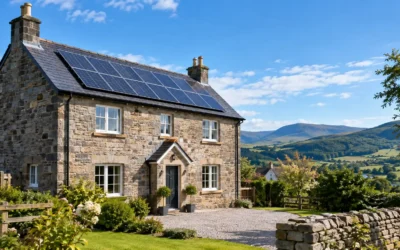
On Perth properties, solar rarely has one fixed appearance: it follows the roof. Within the postcode area PH1, the location is inland, and rooflines across city centre, Riverside, Letham, Kinnoul and Strathmore can differ sharply. A south-facing roof typically presents one compact field of solar panels, while east or west-facing roofs may use splitting panels across east and west faces to spread generation between morning and afternoon. North-facing roofs can be unsuitable for solar in the UK, and shading, nearby foliage, and roof obstruction matter more visually than a postcode label. That is why MCS-certified solar panel installers in Perth and Kinross, supported by credible reviews, tend to treat each roof as its own layout rather than applying a template. For most homes, no permission is needed, although exceptions such as a listed building, conservation area, or national park can change the permitted appearance and may justify checking the local planning office.
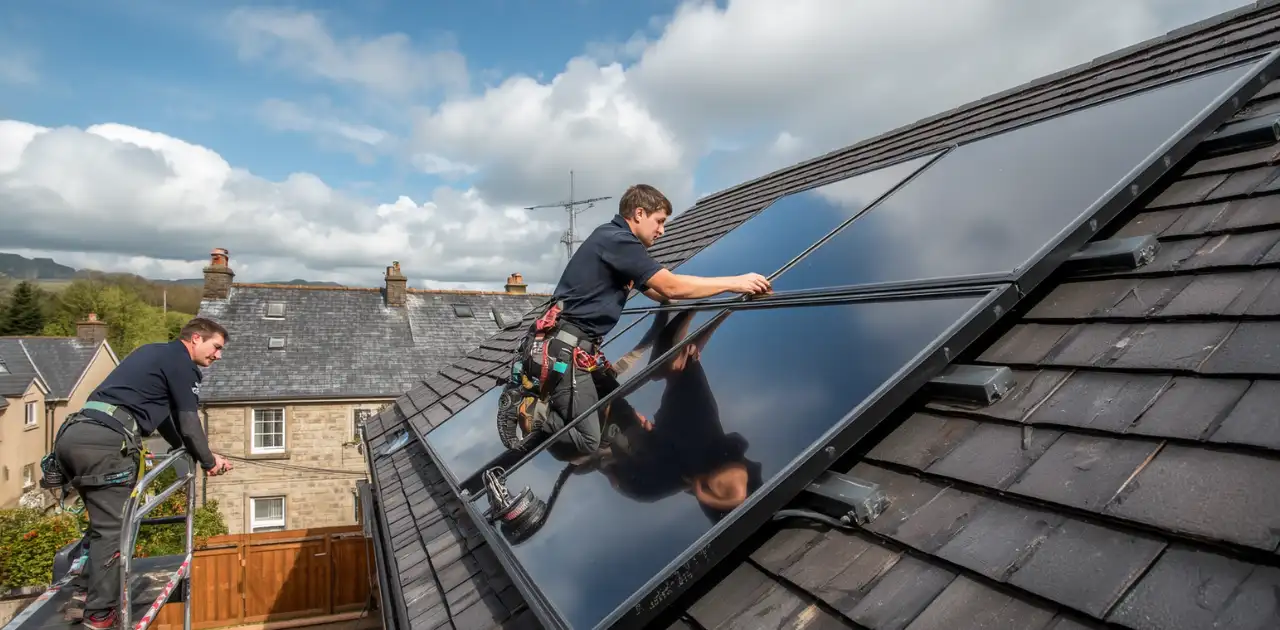
Inside the property, the picture is quieter but equally deliberate. Cooler temperatures in Perth and Kinross can mean panels run more efficiently, while a battery stores daytime production for night, making the system feel less like an add-on and more like part of the home’s energy setup. A common visual specification may pair a 4kWp array with 3,296 kWh/yr modelled output using PVGIS satellite data, roof orientation and shading; a smart meter then supports export arrangements without changing the roofline. Maintenance is simple: no annual maintenance is normally expected, and a quick rinse with a hose can help eliminate dust and dirt so the panels retain full sunlight. Installation can be fast, knowledgeable and efficient, with the entire system installed in one to three days; paired with more efficient panels, more reliable batteries and sustainable home energy, that creates a low-profile solar presence that can also reduce carbon footprint and contribute to net zero emissions.
Local Data for Perth
Local solar planning in Perth and Kinross benefits from looking at the actual population, recorded at 51,430 in the ONS Census 2021, rather than relying only on broad Scottish averages. For a property assessment, the postcode area PH1 and the full postcode help define the location, while satellite data can provide a practical view of roof space, orientation and surrounding shading. These details matter because two properties in the same wider area can have noticeably different installation conditions.
Generation estimates can then be checked against local benchmarks, including around 3,296 kWh per year and an 824 kWh per kWp yield, with 1,280 hrs/yr of sunshine offering another useful reference point. In my experience, figures like these are most valuable when used as planning benchmarks rather than fixed promises, then adjusted for the individual roof, system size and household electricity demand.
Solar Installers in Perth and Kinross
A dependable local installer should understand how roof layout, exposure, household demand, and grid connection affect each solar installation, rather than treating every property as the same job. From my experience, the difference often comes down to the quality of the survey and the practical judgement of the experienced team behind the proposal. Homeowners in nearby areas such as Scone, Coupar Angus, and Kinross can look for a reliable company that explains system sizing, workmanship, and aftercare clearly before any work begins.
Credentials also matter when comparing installers. A proper certification record and multiple accreditations provide useful evidence that the contractor follows recognised standards, while an MCS-certified installation can support access to relevant export arrangements where applicable. For properties across Perth and Kinross, I would focus less on sales language and more on whether the installer can demonstrate sound technical assessment, transparent recommendations, and consistent workmanship from the first site visit through commissioning.
Nearby Towns Also Served
Our coverage extends beyond the immediate Perth area, supporting Perth residents as well as businesses across surrounding communities with practical solar energy services. From smaller properties to larger commercial sites, the aim is to keep the smooth installation process consistent wherever the system is being fitted, with minimal disruption to everyday routines. In my experience, customers in nearby areas often have different roof layouts, energy demands and site conditions, so the initial assessment needs to remain tailored rather than treated as a standard package.
For nearby communities, the service continues after the panels are fitted through dependable maintenance and support, helping customers protect long-term performance over the life of the system. Each property can require a slightly different approach depending on available roof space, electricity usage and the way the system will operate, while MCS-certified installation provides an established quality framework. This makes it practical to serve households and commercial locations around Perth with the same attention to system design, installation quality and ongoing performance.
How much do solar panels cost in Perth?
In Perth, the price makes more sense when you compare system size with expected generation rather than looking at one headline figure. In 2026, a 3 kWp installation may sit around £5,700 – £7,000, with a 12-14 years payback period, while 4 kWp and 5-6 kWp systems require a larger upfront budget. A typical 4kWp system cost is commonly around £6,600 to £8,500, whereas 3–4kWp installations can fall within £6,000–£9,000 depending on the property, roof layout and equipment selected. From the projects I have seen, the useful comparison is the relationship between 4kWp system output, household coverage, and actual electricity demand; a system delivering around 87% of average use can behave very differently from a smaller array in a high-consumption home.
For a larger detached home, 4kW to 5kW can push the budget towards £7,000 and £10,000, while broader market figures of £8,300 – £12,460 and an average of £8,700–£13,300 reflect higher-capacity systems or more involved installations. A standard 3-bedroom home may sit nearer £7,000, but the final figure still depends on roof condition, installation complexity, battery choices and available sunshine hours. The more useful question is then the £587 estimated saving per year and whether £587+ in annual savings is realistic for the household. A quoted 11 to 13 years payback, or 11–13 years in another estimate, should therefore be judged against the system’s actual generation, consumption pattern and long-term running costs rather than the installation price alone.
Are solar panels worth it in Perth?
From a practical installer’s perspective, the value of solar in Perth is best judged against monthly bills, daytime electricity use and how long the system will remain productive. A properly sized solar system can save on electricity bills, with £587+ per year as a useful reference point when generation reaches around 3,280 kWh annually. That becomes more noticeable during periods of cost spikes or changing electricity prices, while government incentives and government schemes can reduce the upfront burden through measures such as 0% VAT on installation. Once commissioned, there is also little to maintain, so the ongoing value is not usually tied to frequent servicing or complex upkeep.
I also assess the return beyond the electricity bill: solar can become a long-term investment where lower running costs strengthen the appeal of a home to future buyers in a competitive property market. Where the installation contributes to a stronger EPC rating, an improvement of 1-2 grades may add another practical benefit, and some market evidence places potential gains at up to 4%. Excess generation can also let homeowners sell excess energy through SEG, with the final tariff determining what each unit exported earns, sometimes within the 3-30p/kWh range. With MCS certified quality and a typical service life of 25-30 years, the economics make more sense when the household plans to use the system for many years rather than judging its value from the initial installation cost alone.
Do solar panels work in winter in Perth and Kinross?
Winter does not make solar panels stop working in Perth and Kinross; it changes the daily pattern of generation. From practical experience, the more useful question is whether the design suits the property and how electricity is used during shorter daylight hours. Good efficiency alongside reliable solar energy services can still provide useful generation when conditions are cloudy, particularly for homes focused on generating own electricity. For properties considering practical renewable options, this makes solar relevant beyond the brightest months, with futureproof homes able to incorporate generation into a wider low carbon opportunities strategy rather than treating panels as a summer-only technology.
Winter performance also becomes clearer when household demand is considered. Homes using heat pumps can have higher electricity needs during colder periods, allowing daytime solar generation to offset part of that demand before additional power comes from the grid. When surplus electricity is available, electricity exported may provide another benefit, with licensed energy suppliers handling eligible export arrangements and allowing households to earn from excess energy where applicable. A properly completed MCS-certified installation, backed by maintenance and support, supports long-term performance and can help homeowners achieve monthly bills that are easier to manage, save on energy costs, and build practical savings while continuing to produce green energy through the winter.
What is an EPC assessment and do I need one?
An EPC assessment measures how efficiently a property uses energy, looking at factors such as insulation, heating, ventilation and lighting. For a home in Perth, it can also help put a planned solar installation into the wider context of the UK property market research, particularly where improvements may increase property value. In practical terms, the EPC gives owners and buyers a standardized picture of the building’s energy performance rather than simply reflecting current electricity prices or the expected remaining electricity savings from solar.
You do not normally need a new EPC simply because you are installing solar panels. However, an EPC is required when a property is sold, when it is let to a new tenant, or when a new building reaches completion in Scotland. An existing EPC is currently valid for up to 10 years, although after making energy improvements, updating it can make sense when presenting the value of investment associated with a broader solar energy investment. For a typical homeowner planning PV, the key point is that the EPC is connected to the property’s sale, letting or construction requirements, rather than being a routine prerequisite for fitting solar panels.
Can I get solar panels on an east or west facing roof in Perth?
Yes. In Perth, an east- or west-facing roof can still be a practical location for solar panels; the main difference is when the system generates electricity. An east-facing array tends to favour morning production, while a west-facing system shifts more output towards the afternoon, which can work well around peak demand and time-of-use periods. In my experience, I would assess shading, roof pitch, roof condition and actual household usage before treating orientation as a deal-breaker. Since electricity prices and remaining electricity savings are influenced by how much generated power is consumed on site, the later output from a west-facing roof can be particularly useful for homes that use more electricity towards the end of the day.
From a solar energy investment perspective, the objective is to match customized solar systems to the property rather than automatically reject a roof that does not face south. An east-west arrangement can spread green energy production across more usable hours, while, as the sun at its peak moves across the sky, a west-facing array can retain useful generation later in the afternoon. I would compare projected generation, self-consumption, export arrangements and typical rates, then assess the quotes from an MCS certified installer. For residents in Perth, that practical comparison gives a more meaningful basis for keeping solar affordable and choosing a system suited to the property’s real electricity pattern.
Do solar panels increase property value in Perth?
Whether solar panels increase property value in Perth depends on the property itself, the condition of the system and how clearly its financial benefits can be demonstrated. Buyers may see value in a well-installed system because it can reduce reliance on grid electricity and provide an established renewable-energy feature. However, there is no guaranteed uplift in sale price, so homeowners should avoid treating solar as a fixed addition to a property’s market value.
From the perspective of UK property market research, the more useful approach is to present evidence rather than assume a percentage increase. Installation records, warranties, system specifications, generation information and export arrangements can make the solar investment easier for a prospective buyer to understand. A properly documented installation is therefore more meaningful than simply advertising that panels are present on the roof.
What is the Smart Export Guarantee (SEG)?
The Smart Export Guarantee is a UK government scheme that enables eligible small-scale generators to receive payment for electricity exported to the grid. It operates under the Smart Export Guarantee Order 2019, while the scheme itself launched in January 2020. The 150,000+ customers figure is important because Ofgem uses that threshold to determine which electricity suppliers become mandatory SEG licensees; it is not a count of SEG participants.
There are no universal typical rates, because each SEG supplier sets its own tariff and contract terms. Some historical offers have been described as paying up to 30p/kWh, but that should not be treated as a standard current payment. Export arrangements can also involve time-of-use or agile tariffs, so homeowners are free to compare suppliers and choose an eligible tariff that suits their generation pattern. The older Feed-in Tariff scheme was closed to new applicants in March 2019, after which the SEG became the relevant export-payment framework for new systems.
Does my solar panel system require any maintenance?
Solar panels generally need very little routine attention, and there is no need to monitor or clean them at all times. In Perth’s climate, rainfall will often help keep suitably angled panels clear, while occasional checks may be worthwhile where debris, bird fouling, nearby trees or other shading can affect performance.
The inverter and electrical components deserve more attention than the panels themselves because faults can reduce generation without being obvious from ground level. Keeping an eye on monitoring data and arranging professional checks when performance changes is usually more useful than repeatedly cleaning an otherwise healthy system.
Do I need planning permission?
For many domestic rooftop installations in Scotland, planning permission is not normally required because solar panels can fall under permitted development rights. However, the rules come with specific limits. For example, Scottish guidance restricts protrusion beyond 1 metre and places additional conditions on listed buildings, World Heritage Sites and certain properties within conservation areas.
The safest approach is to check the property’s circumstances before installation rather than assuming every roof is treated identically. A local planning authority can confirm whether the proposed system qualifies under the relevant permitted development rules, while a building warrant may also be relevant in some circumstances.
How long does it take to install a solar panel?
A typical rooftop solar installation can often be completed in one to two days, assuming the roof, access and electrical arrangements are straightforward. The physical work normally involves mounting the panels, connecting the inverter, completing the electrical installation and carrying out the necessary checks.
More complicated properties can take longer, particularly where additional equipment, difficult roof access, structural considerations or more involved electrical work are involved. A proper site assessment gives the installer a much clearer basis for estimating the installation schedule before work begins.
Are your solar panel installers certified?
When assessing an installer, look beyond the sales discussion and check the credentials of the business and its team members. The required training, technical competence and compliance with recognized industry standards all matter, particularly because the quality of installation affects system safety, performance and future documentation. MCS describes certification as a quality framework for installers working to its standards and provides a searchable installer directory.
Customer feedback, including five-star reviews, can provide useful evidence about communication, workmanship and after-sales service, but reviews should support rather than replace formal certification checks. For a Perth installation, it is sensible to verify the installer through the MCS directory and compare the specification, warranties and proposed installation details before appointing anyone.
FAQ’s
Can east- or west-facing roofs still have solar panels?
Yes. East- and west-facing roofs can produce useful solar energy, although their generation pattern differs from a south-facing roof.
How much electricity can solar panels generate in Perth?
Generation depends on roof direction, shading, system size, pitch and local sunlight conditions, so output should be calculated for the specific property.
Can I use solar power at night?
Solar panels do not generate electricity at night, but battery storage can hold surplus daytime generation for later use.
Can I sell surplus solar electricity to the grid?
Yes, eligible systems can receive export payments through a Smart Export Guarantee tariff.
Does the SEG pay the same rate everywhere?
No. SEG licensees set their own tariff rates, contract terms and other conditions.
Are solar panels useful during cloudy weather?
Yes. Solar PV generates electricity from daylight, so it can still produce power when the sky is cloudy, although output is lower.
Do solar panels need regular cleaning?
Usually not. Rain can naturally clean suitably angled panels, although occasional cleaning may be useful where debris or dirt accumulates.
How long do solar panels normally last?
Solar panels are generally expected to operate for 25 years or more, although other components such as inverters may need replacement sooner.
Should I get several solar installation quotes?
Yes. Comparing several certified installers helps you assess system specifications, warranties, workmanship and overall pricing.
Will my solar panels automatically increase my home’s selling price?
Not necessarily. Their effect on a property’s market value depends on the system, documentation, energy benefits and buyer demand.