If you’re a landlord in Scotland, you already know the basics: keep on top of repairs, make sure systems are safe, and document everything. But alarm compliance is one of those areas that catches people out especially if you inherited the setup from a previous owner or you’ve been “meaning to sort it.”
Right now, that’s a risky place to be, because smoke and carbon monoxide rules don’t wait for your next busy month. And if you’re also trying to stay compliant with your landlord gas safety certificate scotland duties, it’s even easier to overlook the alarm side of things.
In this guide, we’ll walk through what the alarm laws mean for your property, how interlinked smoke alarms should work, where carbon monoxide (CO) alarms fit in, and what to do next so you’re not scrambling when inspectors or tenants spot issues.
Why Scotland’s alarm rules matter (and why landlords get caught)
Scotland is stricter than most places in the UK when it comes to alarms in homes. Many landlords still get caught because:
- the alarms were installed years ago and never updated
- they’re installed in the wrong places (or not linked properly)
- the property has a mix of alarms and some tenants “set them off” without fixing the cause
- people focus on gas safety and forget that alarms are a separate compliance job
In practice, I see the same theme time after time: landlords don’t ignore safety on purpose they just don’t have a simple, reliable system for checking everything is right.
What you need: smoke alarms, heat alarms, CO alarms (and interlinking)
Interlinked smoke alarms (the common “it’s not compliant” issue)
In Scotland, smoke alarms are not just a “nice to have” item. You need the right type of smoke alarm setup and crucially interlinked smoke alarms scotland should operate properly across the home when one alarm is triggered.
Here’s what “interlinked” means in real life:
- If one smoke alarm detects smoke, the other interlinked alarms should also sound.
- Tenants should not hear one alarm in one room while other alarms stay silent.
A frequent problem is when a landlord has alarms installed in parts of the property, but they aren’t all the correct linked system, or the wrong model was added later.
Heat alarms in kitchens (where smoke alarms cause nuisance)
Kitchens are the area most likely to create false alarms. That’s why many landlords need to use heat alarms where appropriate instead of standard smoke alarms.
If you put a smoke alarm where it’s constantly reacting to cooking fumes, tenants will:
- disable it
- remove batteries
- cover it
- or ignore it completely
And once alarms get disabled, it doesn’t matter what the paperwork says the practical risk is the same. Using the right alarm type for the room helps keep tenants safe and keeps alarms working as they should.
Carbon monoxide alarms near boilers (where it matters most)
Carbon monoxide is different from smoke. You can’t see it, you can’t smell it, and it’s deadly.
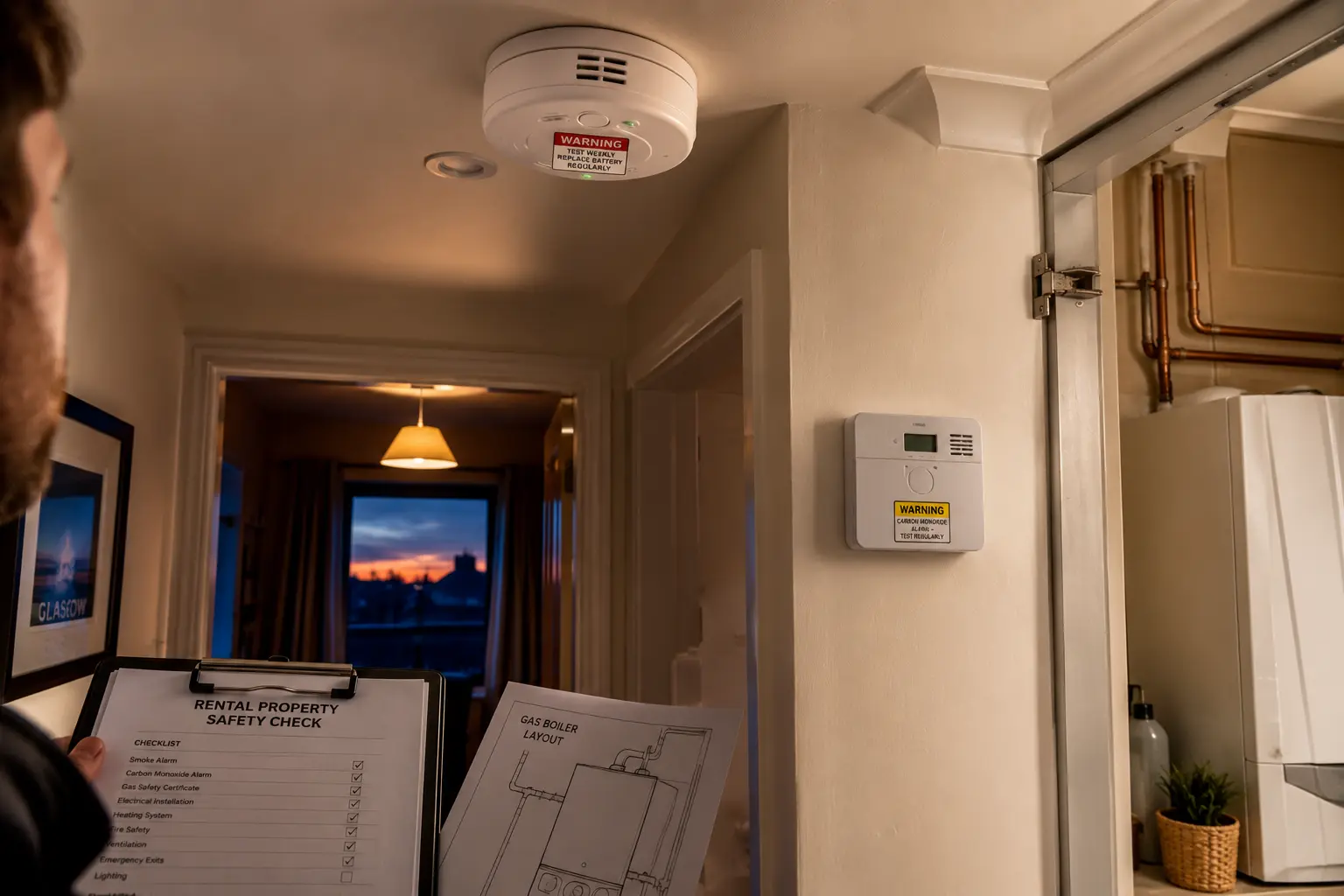
That’s why carbon monoxide detector law scotland expectations matter so much in rental properties. In real terms, you should make sure CO alarms are placed appropriately especially with boilers and other combustion appliances in mind.
A good rule of thumb: if your property has a boiler, don’t treat CO alarms as “general coverage.” They should be correctly positioned for the layout and the risks.
The compliance checklist landlords should use every year
Here’s a straightforward way to think about your alarm responsibilities alongside your other duties. If you can tick these off, you’re doing the right things for tenant safety and compliance.
Quick pre-check before your annual safety visits
- Smoke alarm coverage: Are alarms installed where required across the property?
- Interlink test: If one alarm goes off, do the other alarms sound too?
- Kitchen approach: Are you using the right solution in the kitchen area (often heat where appropriate)?
- CO alarms: Are CO alarms present and correctly located near your boiler area and relevant rooms?
- Tenant interference risk: Are alarms in a place where tenants can easily remove batteries or disable them?
- Maintenance plan: When were batteries last changed, and are alarms due for replacement?
If you want someone to handle this end-to-end, that’s exactly the kind of work we help with at Home Heating Services (Scotland).
How landlords can do this without chaos (a practical approach)
A lot of landlords don’t need more information they need a process.
Book a single compliance check (gas + electrical + alarms planning)
When landlords do separate jobs at different times, compliance slips through the gaps. A better approach is to align your safety checks and plan around key dates.
At Home Heating Services, we support landlords with gas and electrical compliance checks, including the documentation tenants and inspections expect. We also help you take a more “whole property” approach so alarm and safety risks don’t get missed.
If you’re currently arranging checks, it’s worth treating alarms as part of the same safety picture as your other landlord requirements.
“Do I really need to worry if my boiler is serviced?”
Yes and here’s why.
Many landlords concentrate on their gas system safety because it’s one of the most obvious compliance duties. But alarms are what protect tenants between servicing dates.
So even if your boiler is serviced and your landlord gas safety certificate scotland paperwork is in place, you still need to make sure:
- tenants are alerted quickly if smoke occurs
- tenants are protected against carbon monoxide risk
- alarms aren’t disabled or poorly installed
- interlinked smoke alarms are actually linked and working
In other words: gas safety and alarm compliance are different jobs. They support each other, but they don’t replace each other.
Helpful insights: common mistakes to avoid
Do’s
- Do test interlinked smoke alarms properly (not just “did one alarm beep?”).
- Do check kitchen alarm type so cooking doesn’t lead to disabled alarms.
- Do place CO alarms correctly for the boiler situation and your property layout.
- Do schedule alarm checks alongside other compliance work to reduce missed dates.
Don’ts
- Don’t assume a previous landlord’s alarms are correct.
- Don’t ignore repeated nuisance alarms fix the cause.
- Don’t treat CO alarms like optional add-ons.
- Don’t wait until a tenant complains or an issue becomes urgent.
Why choose Home Heating Services Scotland for landlord compliance?
Home Heating Services Scotland helps landlords keep properties safe and compliant across central Scotland, including Perth and the surrounding areas. We’re used to working with busy landlords who need clear, reliable service not guesswork.
If you want an easy way to keep on top of the essentials, we support landlords with compliance-focused inspections and documentation. And when you’re trying to manage multiple responsibilities (gas safety, electrical safety, and wider property safety), having a trusted team makes a real difference. (homeheatingservicesscotland.co.uk)
For landlords specifically, you can also review our landlord services here: Landlord services from Home Heating Services Scotland. (homeheatingservicesscotland.co.uk)
And if you want to get moving quickly, you can start at Home Heating Services Scotland for booking and next steps. (homeheatingservicesscotland.co.uk)
Conclusion: get your rentals compliant before the next problem starts
If you manage rentals in Scotland, you can’t afford to treat alarms as an afterthought. Between interlinked smoke alarms scotland, the right approach for kitchens, and carbon monoxide detector law scotland duties near boilers, the details matter.
The takeaway is simple:
- Don’t assume older alarms are correct.
- Make sure interlinked alarms are actually linking.
- Ensure CO alarms are appropriately placed for boiler-related risk.
- Keep your wider landlord safety checks in sync especially your landlord gas safety certificate scotland arrangements.
If you’d like a clear, professional compliance check, book your visit with Home Heating Services Scotland and get your property safety in order.
FAQ
Do I need alarms in every rental property in Scotland?
Yes. Smoke and CO alarm rules apply to homes in Scotland, and you should treat rentals as needing full compliance, not “best effort.”
What’s the main landlord gas safety document called in Scotland?
It’s your Gas Safety Certificate (CP12), which forms part of your ongoing responsibilities as a landlord.
How often should alarms be checked?
At a practical level, landlords should include alarm checks in their regular compliance rhythm (and always address issues immediately if tenants report problems).
What happens if my interlinked smoke alarms aren’t linked correctly?
They may not alert the whole property during a fire, which creates a real safety gap and can leave you non-compliant.
Can I book multiple landlord checks in one go?
Yes many landlords choose to combine safety work so the property is assessed once, with the right documentation and actions handled together.
CTA
If you want help getting everything aligned for your rental property, book your compliance check with Home Heating Services Scotland here:
https://homeheatingservicesscotland.co.uk/