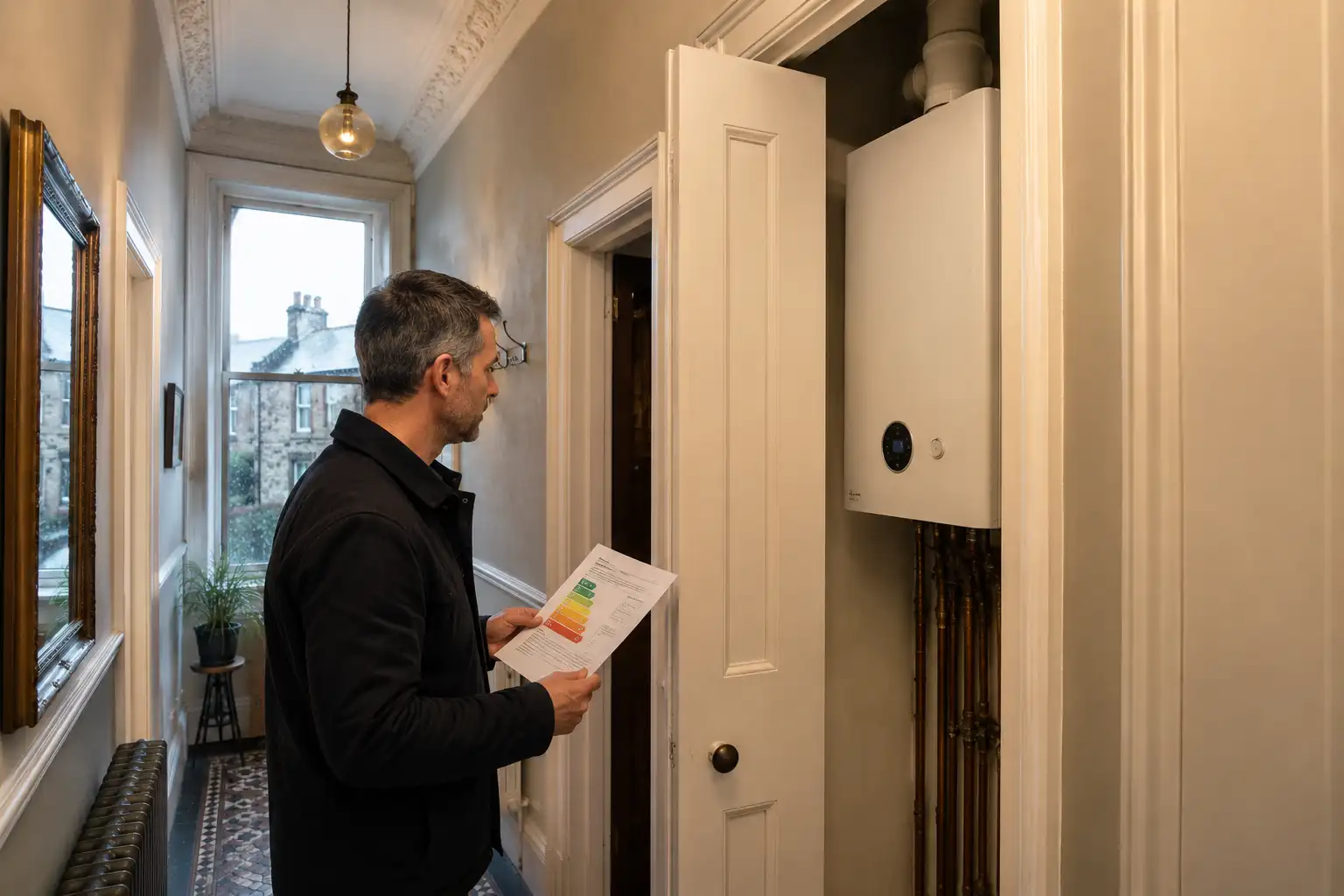
You’ve heard the rumblings about tougher energy rules for rental homes, and you’re not sure what’s real and what’s just noise. If you let a property in Perth, Dundee, Stirling, or Fife, the landlord EPC rules Scotland is working towards could affect what you need to do over the next few years.
Here’s the honest picture. Some rules are already in place. Others are still proposals working their way through the Scottish Government. This post separates the two, so you know what applies now and what to plan for.
What Are the Current EPC Rules for Landlords in Scotland?
Right now, every rental property in Scotland must hold a valid Energy Performance Certificate (EPC). That part is settled and applies to you today.
An EPC tells you how energy efficient your property is. You need one before you market a property to let, and it stays valid for a set period. Beyond that, the bigger changes are still proposed rather than law, so don’t panic-spend on guesswork.
If you want the wider picture on your legal duties, our post on landlord responsibilities for heating in Scottish rental properties covers the full compliance side.
What EPC Changes Are Coming for Landlords?
The main proposed change is a minimum energy efficiency standard for private rented homes. Under the plans, properties would need to meet an EPC heat retention rating of Band C.
These EPC changes landlords keep asking about come from a Scottish Government draft consultation. The Draft Energy Efficiency (Domestic Private Rented Property) (Scotland) Regulations consultation was published on 6 June 2025 and closed for responses on 29 August 2025.
Keep one thing in mind: these are proposals, not enacted law yet. But the direction of travel is clear, and planning early beats scrambling later.
The Proposed Deadlines
The consultation sets out two key dates you should have on your radar.
- From 2028: the minimum standard would need to be met when you let a property to a new tenant.
- By the end of 2033: all privately rented properties would need to meet the same standard.
If your property already sits comfortably at Band C, you’re in good shape. If it doesn’t, you’ve got time to plan the work rather than rush it.
The New EPC Ratings Planned for 2026
Here’s a shift that catches a lot of landlords off guard. As part of EPC reform, three new ratings are planned to appear on EPCs in 2026.
- Heat retention rating — how well your property holds heat through insulation, walls, floors, roofs, and windows.
- Energy cost rating — the cost side of running the home.
- Heating system rating — how your heating setup performs.
The proposed minimum energy efficiency standard is tied to the heat retention rating. So the fabric of your building — insulation and how well it keeps warmth in — matters more than ever.
Who Do These Rules Apply To?
The proposed standard would apply to tenancies covered by the Repairing Standard under the Housing (Scotland) Act 2006. That’s the legal baseline for most private lets in Scotland.
Certain arrangements sit outside this. For example, where a landlord shares their own home with someone, or where the dwelling isn’t a house, such as a mobile home. Social housing is also excluded under the relevant legislation.
Remember too that the Repairing Standard itself was updated in March 2024 to require a fixed heating system capable of heating every occupied room. Portable heaters don’t meet that bar, so if you’re relying on them, sort that first.
How to Get Your Property Ready
Start with your current EPC and work out where you stand. If you’re below Band C, focus on the improvements that lift your heat retention rating.
Because the proposed standard leans on heat retention, insulation is often the smartest first move. A warm, well-sealed home keeps heat in, cuts tenant bills, and helps your rating. From there, an efficient, modern heating system supports both comfort and compliance.
For older or harder-to-heat properties, it’s worth weighing up cleaner heating too. Our guide on air source heat pumps in Fife walks through whether that route suits your home.
A well-maintained boiler also plays its part. Regular servicing keeps your heating running efficiently, and our post on boiler servicing in Scotland explains what a proper service covers.
Do’s and Don’ts
Do:
- Check your current EPC and note your rating today.
- Prioritise insulation and heat retention improvements early.
- Keep a fixed heating system that warms every occupied room, in line with the March 2024 Repairing Standard update.
- Use a Gas Safe registered engineer for all gas and boiler work. Not sure when? Our post on when you need a Gas Safe registered engineer helps.
- Plan upgrades over the next few years rather than in a last-minute rush.
Don’t:
- Treat the proposed 2028 and 2033 dates as optional — they’re coming into focus fast.
- Assume portable heaters satisfy your legal duties.
- Leave a failing boiler until it dies mid-winter. If you’re in Dundee, our guide on emergency boiler repairs shows what to expect.
- Ignore the new 2026 EPC ratings — they change how your property is judged.
A Common Scenario for Scottish Landlords
Picture a landlord in Stirling with a property sitting at Band D. They plan to re-let in 2028 and assume they’ll deal with it “nearer the time.”
Then the work stacks up — insulation, a heating upgrade, scheduling engineers during a busy period. A landlord who starts now can spread that out sensibly. One who waits risks a squeeze right when the new-tenancy rule bites. Early planning turns a headache into a to-do list.
Why Home Heating Services Scotland
We help landlords across Perth and central Scotland, including Dundee, Stirling, and Fife, keep their properties warm, safe, and ready for what’s ahead. With over 20 years of combined experience, we know Scottish homes and the demands landlords face.
Every gas and boiler job is carried out by a Gas Safe registered engineer, registration number 559575. From boiler servicing and installations to heating upgrades that support a better EPC rating, we handle the heating side so you can focus on running your lets. See how we support the private rented sector on our landlords page, or browse our full range of services.
The Bottom Line
The minimum EPC rating Scotland is moving towards is Band C, based on a new heat retention rating, with proposed deadlines of 2028 for new lets and the end of 2033 for all privately rented homes. These are proposals for now, but the direction is firm.
Your clearest next step: check your current EPC, target heat retention improvements, and keep your heating system efficient and compliant. Start early, and the deadlines look far less daunting.
FAQ’s
What is the proposed minimum EPC rating for landlords in Scotland?
The proposed standard is an EPC heat retention rating of Band C for privately rented properties. It’s a Scottish Government proposal, not yet enacted law.
When would the new EPC rules for landlords apply?
Under the proposals, the standard would apply from 2028 for new tenancies and by the end of 2033 for all privately rented properties.
Do I need an EPC for my rental property right now?
Yes. Every rental property in Scotland must currently hold a valid Energy Performance Certificate before you let it.
What new EPC ratings are planned for 2026?
Three new ratings are planned: a heat retention rating, an energy cost rating, and a heating system rating. The proposed minimum standard is tied to the heat retention rating.
Does the Repairing Standard affect my EPC obligations?
The Repairing Standard sets your baseline legal duties as a landlord, including providing a fixed heating system in every occupied room. EPC rules sit alongside this — meeting both is the goal.
Ready to Get Ahead of the Changes?
Not sure where your property stands or what heating upgrades make sense? We’ll give you a straight answer. Get in touch with Home Heating Services Scotland today and get your lets ready before the deadlines arrive.